I Gede Eka Agung Agastya Punia
Department of Medical Education, Faculty of Medicine, Mahasaraswati University, Bali, Indonesia.
Email: agastya (at) unmas (dot) ac (dot) id
Bioethics is a rational ethics that starts from the analysis of scientific, biological, and medical data, to ethically assess the legitimacy of medical interventions. Bioethics is the foundation of modern medical practice; any medical practitioner must adhere to it. According to Beauchamp & Childress (1978), there are four core bioethical principles, or pillars, that are fundamental to modern clinical practice. All medical decision-making must be aligned with these four principles.
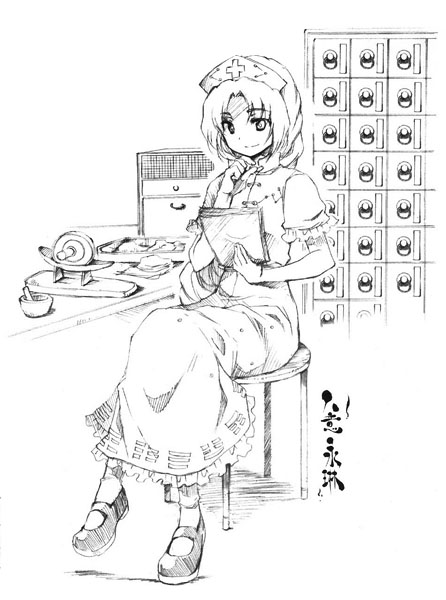
Eirin Yagokoro, a character from Touhou Project, is a so-called medical genius that resides in Eientei. She is famous for creating the Hourai Elixir with the help of Kaguya Houraisan’s power to control eternity, which makes her stay and devote herself to Kaguya on earth. Eirin also works as Gensokyo’s premier pharmacist, selling medicines at Eientei (Touhouwiki, 2025a). However, does she adhere to the bioethical principles of modern medicine? This paper examines Eirin’s decisions from a bioethical perspective and discusses their implications.
THE FOUR PILLARS OF BIOETHICS
According to Beauchamp & Childress (2019), bioethical principles can be divided into four categories:
- The Principle of Autonomy encompasses respect for the patient’s rights, particularly regarding their autonomy. It asserts that patients have the moral right to self-determination and requires healthcare providers to respect the decisions made by individuals, who are able to act intentionally with understanding and without controlling influences.
- The Principle of Beneficence prioritizes all actions aimed at the patient’s well-being. Beneficence is an active duty to contribute to the welfare of the patient. This principle requires providers to take positive steps to prevent harm, remove harm, and improve the patient’s situation.
- The Principle of Nonmaleficence prohibits actions that worsen the patient’s current condition. It imposes a negative obligation on medical practitioner to refrain from inflicting unnecessary pain or injury. Beauchamp & Childress (2019) also argued that nonmaleficence involves avoiding negligence, which is defined as a departure from the professional standards of care that results in a risk of harm.
- The Principle of Justice prioritizes fairness, that is, the fair, equitable, and appropriate distribution of health resources in society. It dictates that patients should be treated equally regardless of their socioeconomic status, race, or gender.
These four principles provide a foundational that are widely accepted framework for moral reasoning and ethical decision-making in biomedical ethics and health care practice.
EIRIN AND THE HOURAI ELIXIR
In Touhou, Eirin is presented as a medical genius who resides in Eientei, though she was a lunarian before. Eirin’s backstory involves creating the Hourai Elixir for Kaguya, leading to the latter’s exile from the Moon for consuming a forbidden substance (Touhou Wiki, 2025a).
The Hourai Elixir was her magnum opus but also her most controversial achievement. Eirin used Kaguya’s unique ability to manipulate eternity to formulate this forbidden substance, as Kaguya requested. The elixir was deemed illegal on the Moon because consuming it would render a Lunarian impure by associating them with death’s removal, violating lunarian society’s morals regarding purity and natural cycles.
Consumption of this elixir grants the subject biological immortality, characterized by the cessation of senescence and complete immunity to disease. Although the subject retains their original physical fragility, the elixir facilitates rapid regeneration; cases such as critical trauma are resolved within days, and even total physical destruction is followed by comprehensive restoration (Touhou Wiki, 2025c).
Although Eirin is a fictional character, she is still a professional in medicine living in modern times. Her creation, the Hourai Elixir, is such a miracle drug that can remove death itself from the picture. However, does it adhere to bioethical principles as a whole?
BIOETHICAL ANALYSIS
For any practitioner of medicine, it is important that we analyze Eirin’s actions in the development and administration of her magnum opus from a bioethics perspective. The Hourai Elixir’s effects do raise some challenges in bioethics, so we shall analyze this issue in detail, from the standpoint of each of the four core bioethical principles.
Autonomy: The main idea of this principle is to emphasize respect for patient self-determination, which requires informed consent free from coercion and based on full understanding of risks and benefits. In daily practice, Eirin adheres to the principle of autonomy. She never forces her patient to undergo treatments without their consent. As for the Hourai Elixir, Eirin is also in line with this principle because she followed her patient’s (Kaguya) request to achieve true immortality (Touhou Wiki, 2025a). This was a choice from the patient which Eirin respected, mirroring patient-driven request for elective enchantments.
However, when regarding the Hourai Elixir, there is an issue here about true autonomy. The case of Fujiwara no Mokou, who stole and ingested the elixir without Eirin’s involvement or informed consent (Touhou Wiki, 2025b), needs further discussion. In Mokou’s case, she lacked the understanding and safeguards before consuming the elixir, which turned her immortality into a curse, preventing her right to end her suffering through death. In this case, Mokou could not achieve informed consent before drinking the drug, or had any safety warnings. So, does Mokou drank the elixir because she understood the risk-benefit, like in an informed consent? Or did she make a compulsive decision that harms her true autonomy? And if she was compulsive, who’s responsible? This case parallels the ethical concerns involved in cases like gene therapy, in which permanent changes of genes demand rigorous consent processes to prevent non-autonomous outcomes.
Justice: This principle demands equality for resources and fair treatment without discrimination (Beauchamp & Childress, 2019). In Gensokyo, Eirin follows this principle by providing medical services and medicines to anyone who visits, treating both humans and youkai without discrimination (Touhou Wiki, 2025a). Her drugs are known for being effective, fairly priced, and accessible for everyone in Gensokyo. This reflects equity, especially in a diverse society like Gensokyo, where youkai rarely suffer physical ailments but may need spiritual or specialized treatments. An example is the case of Alice Margatroid, a youkai magician, who regularly purchases the Butterfly Dream Pill from Eirin, demonstrating open access across species lines.
Beneficence: This principle prioritizes all actions of healthcare providers to actively promote patient well-being, taking positive steps to prevent harm, remove harm, and improve the patient’s situation (Beauchamp & Childress, 2019). Eirin makes medicine known to successfully work with no side effects. She is also able to make all sorts of medicines, from ordinary cold medicine to drugs that can manipulate dreams (Touhou Wiki, 2025a). This is the highest level of beneficence, where her medicines prevent and remove harm by improving her patients’ quality of life. A specific case is when Eirin made the Ultramarine Orb Elixir in Legacy of Lunatic Kingdom (2015) to strengthen the human protagonists before they travel to the Moon, as Eirin was afraid they would not able to stand their ground in a fight against the lunarians (Touhou Wiki, 2025d).
However, the case of Fujiwara no Mokou and the Hourai Elixir runs counter to the principle of beneficence. Mokou’s immortality only amplified her despair, trapping her in cycle of life without escape. This makes the elixir into some kind of torment and harm for Mokou, which definitely harms her quality of life (Touhou Wiki, 2025b) This life extension could cause loss of meaning for the person who consumes the Hourai Elixir, and probably some psychological strain as well.
Nonmaleficence: This principle means avoiding actions that worsen a patient’s condition or inflict unnecessary harm. That also includes negligence in professional standards. Eirin’s medicines are renowned for efficacy without side effects (Touhou Wiki, 2025a), which adheres perfectly to the principles of nonmaleficence; however, in the case of the Hourai Elixir, Mokou endures repeated painful deaths and revives, being unable to end her anguish. This, of course, only causes more harm to Mokou. Rumored experiments on rabbits further suggest a pattern of harm (Touhou Wiki, 2025a).
CONCLUSION
When seen through the four core bioethical principles from Beauchamp and Childress, Eirin Yagokoro is a complex figure. She has both exemplary adherence and profound ethical tensions. This was proven by her daily practice at Eientei, where she upholds autonomy by honoring patient consent, justice through equitable access to medicines across humans and youkai, beneficence through effective and life-improving treatments, and non-maleficence with side-effect-free remedies. These all mirror the ideals of modern clinical ethics in a fantastical context.
However, her magnum opus, the Hourai Elixir, reveals critical flaws, especially in the case of Kaguya Houraisan and Fujiwara no Mokou. While Kaguya’s informed request aligns with autonomy, Mokou’s unauthorized consumption of the elixir undermines true self-determination, turning immortality into a curse of endless suffering. This violates beneficence and non-maleficence by amplifying harm and despair. Even though the Hourai Elixir is a triumph of medical genius, it also illustrates how immortality without safeguards can erode dignity, echoing real-world debates on gene editing and life extension. Modern practitioners must learn from this story to ensure that every medicine or procedure fulfills the ultimate goal: to heal while avoiding, or at the very least minimizing, harm to the patient.
REFERENCES
Beauchamp, T.L. & Childress, J.F. (1978) Principles of Biomedical Ethics. Oxford University Press, Oxford.
Beauchamp, T.L. & Childress, J.F. (2019) Principles of Biomedical Ethics. 8th ed. Oxford University Press, Oxford.
Touhou Wiki. (2025a) Eirin Yagokoro. Available from: https://en.touhouwiki.net/wiki/Eirin_Yagokoro (Date of access: 27/December/2025).
Touhou Wiki. (2025b) Fujiwara no Mokou. Available from: https://en.touhouwiki.net/wiki/Fujiwara_no_Mokou (Date of access: 27/December/2025).
Touhou Wiki. (2025c) Hourai Elixir. Available from: https://en.touhouwiki.net/wiki/Hourai_Elixir (Date of access: 27/December/2025).
Touhou Wiki. (2025d) Ultramarine orb Elixir. Available from: https://en.touhouwiki.net/wiki/Ultramarine_Orb_Elixir (Date of access: 27/December/2025).
About the author
I Gede Eka Agung Agastya Punia, M.D. LL.M., is a medical doctor, licensed attorney, and lecturer specializing in bioethics, biostatistics, medical philosophy, and AI in medicine. He is currently pursuing a PhD in Medicine at the University of Indonesia Simultaneously, he is undertaking graduate studies in Philosophy at Driyarkara School of Philosophy, as well as bachelor’s degrees in Mathematics at Indonesia Open University and Computer Science at Bina Nusantara University. His multidisciplinary research spans mathematics, philosophy, education, and AI within a medical and bioethical framework.
A long-time Touhou Project enthusiast, he performed its soundtrack on the piano during high school. During the grueling clinical rotations of medical school, he turned to Touhou games during quiet night shifts to maintain his resilience. His favorite titles include mainline danmaku games such as Imperishable Night and Legacy of Lunatic Kingdom, as well as combat games like Scarlet Weather Rhapsody and Antinomy of Common Flowers. Beyond gameplay, Touhou also inspired him to study the Japanese language and explore Shinto philosophical concepts regarding the nature of gods.



 Journal of Geek Studies