Muzafar Riyaz
Xavier Research Foundation, St. Xavier’s College, Palayamkottai-627002, Tamil Nadu, India.
Email: bhatmuzaffar471 (at) gmail (dot) com
https://doi.org/10.5281/zenodo.10644031
The Xenomorph is an iconic extraterrestrial creature that has captivated audiences in the realm of science fiction. Known for its menacing appearance and deadly nature, the Xenomorph has become a symbol of terror and has left an indelible mark on popular culture. Ridley Scott’s 1979 film Alien introduced this mysterious creature for the first time. Since then, it has emerged as a key character in the franchise and inspired numerous sequels, spin-offs, and adaptations. The term originates from the Greek words xenos that can be translated as ‘stranger’ or ‘foreigner’ and morphḗ, which can be translated as ‘form’. Therefore, one may think of a xenomorph as an “alien-shaped thing”. The species is seldom referred to by the term xenomorph in the films. They are more often referred to as aliens, things, them, or it. The moniker xenomorph continues to be around despite the disapproval of certain fans and the designers’ initial intentions (Marsh et al., 1978).

Throughout its history in science fiction and horror, the Xenomorph has undergone various adaptations and evolutions. The franchise expanded with sequels, prequels, and spin-offs, delving deeper into the Xenomorph’s origins, biology, and its interactions with human characters. The creature’s life cycle, from the Facehugger stage to the fully-grown, nightmarish form, adds an additional layer of terror and suspense.
The Xenomorph’s impact extends beyond the silver screen. It has made appearances in comics, video games, literature, and other forms of media, further cementing its status as a cultural phenomenon. The creature’s ability to tap into humanity’s primal fears, its relentless pursuit of its prey, and its highly adaptive and lethal nature have made it a popular antagonist in various storytelling mediums (Roza, 2015). The Xenomorph has influenced and inspired countless filmmakers, writers, artists, and creators within the science fiction and horror genres (Constable, 1999). Its unique design, the legacy of H.R. Giger’s artistic vision, has become instantly recognizable and iconic, serving as a benchmark for monstrous and terrifying creatures in popular culture (Rockoff, 2011). As a result, the Xenomorph has garnered a devoted fan community that continues to celebrate and explore the creature’s mythology, dissecting its symbolism, and engaging in discussions about its place within the broader context of science fiction and horror (Vermaak, 2019). Generally, the Xenomorph’s presence in science fiction and horror is a testament to its enduring impact. It stands as a chilling embodiment of the unknown and a reminder of our vulnerability in the face of the alien and the monstrous and its legacy as a fearsome and iconic creature continues to resonate with audiences, ensuring its place in the annals of science fiction and horror history (Barkman & Tokbergenova, 2017).
CONCEPT AND DESIGN
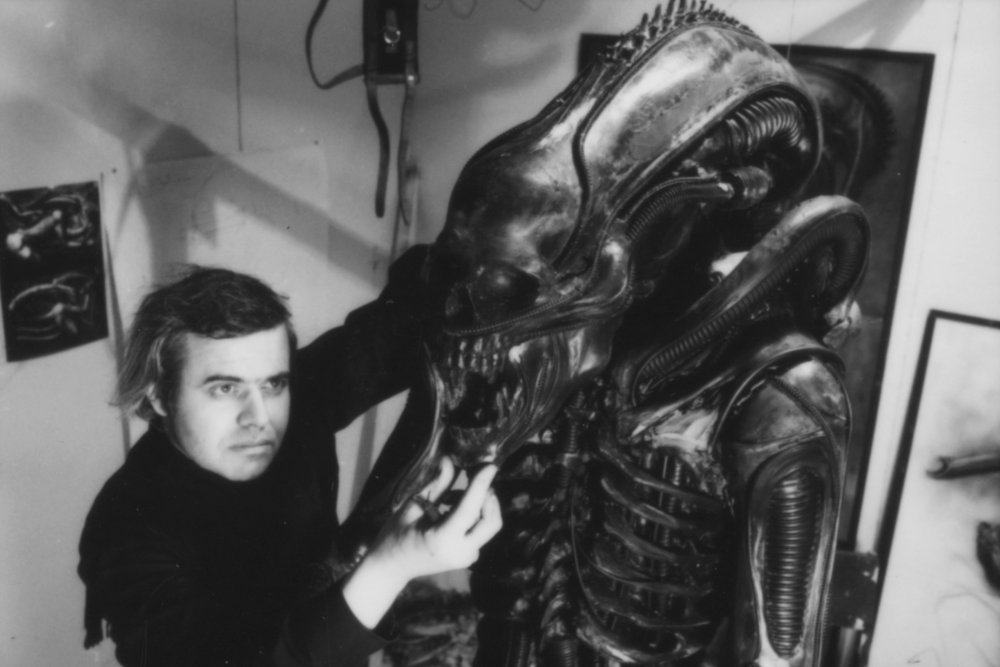
The design of the Xenomorph is both fascinating and horrifying, a product of the creative vision of Swiss artist H.R. Giger. Giger’s unique artistic style, characterized by dark, biomechanical forms and sexual overtones, played a pivotal role in shaping the distinctive look of the creature (Škrgić, 2017). The Xenomorph is a biomechanical organism, blending elements of an insect and a reptile with mechanical features. Its elongated head features a large, elongated cranium, a ridged skull, and a menacing, elongated jawline filled with razor-sharp teeth. The creature’s sleek, elongated body is adorned with a smooth, exoskeletal-like surface, accentuated by a glossy black coloration. It possesses a long, whip-like tail that aids in balance and serves as a formidable weapon (Újvári, 2018).

The Xenomorph’s most distinctive feature is its elongated, retractable inner jaw, commonly referred to as the “Xenomorph’s second mouth” or the “inner mouth”. This appendage, which extends from within the creature’s mouth, is equipped with sharp teeth and is capable of delivering a fatal strike to its victims. This additional mouth adds an extra layer of horror and unpredictability to the Xenomorph’s attacks (Cruz, 2012).
Giger’s influence extended beyond the Xenomorph itself. His conceptual art and designs for the film also shaped the overall visual aesthetic of the Alien universe. The haunting and atmospheric environments, as well as the intricate spacecraft and alien architecture, all bear his signature style, contributing to the eerie and otherworldly atmosphere of the films (Roberts, 2006). Giger’s contributions to the Alien franchise earned him an Academy Award for Best Achievement in Visual Effects in 1979. His work on the Xenomorph and Alien also secured his place as one of the most visionary and influential artists in the realm of science fiction and horror (Škrgić, 2017). His legacy lives on not only through the enduring popularity of the Xenomorph but also through the profound impact on his art has had on the broader art community (Glick, 2017; Conway, 2017).
THE XENOMORPH’S HISTORY
The Xenomorph’s history in science fiction is a fascinating journey that spans multiple films, expanding the creature’s lore and adding layers of complexity to its terrifying nature. Since its debut in the 1979 film Alien the Xenomorph has evolved into a seminal figure in the genre, captivating audiences and leaving an indelible mark on science fiction and horror storytelling (Muir, 2013). In Alien, the crew of the Nostromo spacecraft encounters a derelict alien vessel and unwittingly brings back a lethal organism known as a Facehugger. This creature implants an embryo into one of the crewmembers, which later erupts as a fully-grown Xenomorph, setting the stage for a relentless and nightmarish pursuit.
The success of Alien paved the way for sequels, each expanding the Xenomorph’s mythology and introducing new facets of its terrifying existence. James Cameron’s 1986 sequel, Aliens, shifted the focus to a group of heavily armed marines facing off against a horde of Xenomorphs on a colonized planet. This film further highlighted the Xenomorph’s adaptability, hive mentality, and the inclusion of a queen, deepening the creature’s hierarchy and social structure. Subsequent sequels, such as Alien 3 (1992) and Alien: Resurrection (1997) explored different narrative directions and introduced variations of the Xenomorph, including genetic experiments and hybrid creatures. These installments delved into the themes of genetic manipulation and cloning, adding a new layer of complexity to the Xenomorph’s origins and emphasizing its status as a bioengineered nightmare (Conway, 2017).
The franchise also expanded through prequels, starting with Prometheus in 2012 and followed by Alien: Covenant in 2017. These films delved into the backstory of the Xenomorph and the Engineers, the alien race responsible for its creation. They explored themes of creation, artificial intelligence, and the pursuit of immortality, expanding the philosophical and existential dimensions of the Xenomorph’s existence (Addey, 2018).
The Xenomorph’s impact extends beyond the film franchise, permeating other media forms. It has appeared in comics, video games, and literature, allowing fans to further explore and engage with the creature’s mythology. These adaptations have provided new narratives, expanded universes, and additional encounters with the Xenomorph, further cementing its status as a menacing force in science fiction (Melzer, 2010). The Xenomorph’s enduring appeal lies in its primal and visceral qualities; its deadly lifecycle, stealthy behavior, and relentless pursuit of prey tap into humanity’s instinctual fears of being hunted and overpowered. Its iconic design has become synonymous with extraterrestrial terror, inspiring countless filmmakers and artists and setting the standard for monstrous creatures in the genre (Melzer, 2006). The Xenomorph’s evolution in science fiction is a testament to its enduring impact. From its origins in Alien to its expansion through sequels, prequels, and adaptations, the Xenomorph has become an iconic figure that embodies fear, unpredictability, and the unknown. Its history in science fiction continues to fascinate and terrify audiences, solidifying its place as one of the most memorable and terrifying creatures in the genre’s history (Roberts, 2010).
Comics have provided a fertile ground for the Xenomorph’s expansion. Numerous comic book series have been published featuring the creature, delving into its origins, encounters with other characters and species, and its ongoing pursuit of prey. Notably, Dark Horse Comics has been instrumental in bringing the Xenomorph to the pages of comic books, with titles like Aliens (1988–1989), Aliens vs. Predator (1989–2020), and Aliens: Colonial Marines (1993–1994). These comics have expanded the lore of the Xenomorph and its interactions with other iconic characters, creating rich and interconnected storylines.

Video games have also embraced the Xenomorph, translating its terror and suspense into interactive experiences. From first-person shooters to survival horror games, the Xenomorph has been featured as a formidable and relentless adversary, challenging players to navigate dangerous environments while being hunted by the creature. Games such as Alien: Isolation (Creative Assembly, 2014) have garnered critical acclaim for their atmospheric storytelling, intense gameplay, and faithful depiction of the Xenomorph’s characteristics and behavior (Sloan, 2016).

Literature has provided yet another avenue for the Xenomorph’s expansion and exploration. Numerous novels and novelizations have been written, expanding upon the creature’s mythology and offering new narratives within the Alien universe. These books often delve into the Xenomorph’s origins, its encounters with different characters, and the broader implications of its existence. Authors like Alan Dean Foster, Tim Lebbon, and James A. Moore have contributed to the literary expansion of the Xenomorph, offering fans a deeper understanding of the creature and its world.
The presence of the Xenomorph in these different media forms has allowed for a multi-dimensional exploration of the creature’s mythology. Each adaptation brings a unique perspective and adds to the broader narrative tapestry, enriching the overall understanding of the Xenomorph’s origins, behavior, and impact. These adaptations also offer fans the opportunity to immerse themselves in the Xenomorph’s world, further fueling their fascination with the creature and the terror it embodies. Moreover, the Xenomorph’s adaptation into comics, video games, and literature has expanded its reach to wider audiences, extending its cultural impact beyond the confines of film (Burke, 2015). It has inspired fan communities, cosplayers, and creative fan works, fostering a sense of collective engagement and appreciation for the Xenomorph across different forms of media (Csicsery-Ronay, 2007).
LIFE CYCLE AND BEHAVIOR
The Xenomorph possesses a unique and horrifying life cycle that contributes to its terrifying nature. The life cycle begins with the Facehugger, a parasitic creature that attaches itself to a host organism, typically a human. The Facehugger implants an embryo into the host’s body, which eventually grows and incubates within the host, remaining hidden until it bursts forth in a violent and gory birth. This initial stage of the life cycle sets the tone for the Xenomorph’s parasitic nature and its ability to exploit and manipulate other life forms for its own survival (Fleury & Mamber, 2019).
After emerging from a host, the Xenomorph gains its fully-grown form, characterized by its sleek and biomechanical appearance, as described above. It is a highly adaptive predator, capable of surviving in various environments, be it the confined spaces of a spacecraft or the vastness of an alien world. The creature’s behavior is marked by its relentless pursuit of prey; it is a cunning and patient hunter, utilizing stealth, agility, and its acute senses to track down its victims (Littau, 2011). It possesses an uncanny ability to blend into its surroundings, making it a formidable opponent that strikes without warning (Csicsery-Ronay, 2007). The Xenomorph displays a degree of intelligence, demonstrating problem-solving skills and a capacity for learning, making it an even more formidable adversary (Gordon, 2018).
Once the Xenomorph captures a victim, it can use them as a host for the next generation of Facehuggers, perpetuating its life cycle. This parasitic reproductive strategy adds an additional layer of horror and heightens the sense of dread associated with the Xenomorph (DiGioia, 2021).
Furthermore, the Xenomorph exhibits a hive-like social structure, with a queen at the apex. The queen is responsible for laying eggs and overseeing the reproductive cycle of the species. This hierarchical organization showcases the Xenomorph’s ability to function as a collective and work together to defend the hive and expand its population. The Xenomorph’s anatomical features and behaviors have become iconic, representing the epitome of a relentless and lethal predator within the realm of science fiction (Csicsery-Ronay, 2007).
CULTURAL IMPACT AND LEGACY
The Xenomorph’s cultural impact and legacy can be observed through various avenues, including its influence on film, art, fashion, and the broader science fiction genre. First and foremost, it has become synonymous with extraterrestrial terror and its iconic appearance has inspired countless filmmakers, artists, and creature designers, shaping the visual landscape of science fiction and horror cinema (Fleury & Mamber, 2019).
The original 1979 film revolutionized the portrayal of space horror, introducing a gritty and atmospheric tone that captivated audiences (Glick, 2018). Subsequent films in the series, along with spin-offs and prequels, have further expanded the Xenomorph’s mythology and cemented its status as a cultural touchstone, extending beyond cinema to other forms of media and merchandise, as explored above.
In addition, the Xenomorph’s influence can be seen even in the world of art and fashion. The creature’s biomechanical design and haunting aesthetic have inspired artists and designers to incorporate elements of the Xenomorph into their works (Gilmore, 2015). Its influence can be found in sculptures[1], paintings[2], and even fashion collections[3], highlighting the creature’s enduring appeal and its ability to resonate with creative minds across different disciplines (Efland, 1976).
The Xenomorph’s cultural impact is also reflected in its status as a pop culture icon and as a symbol of horror, fear, and the unknown. The creature’s image is often referenced and parodied in various forms of media, appearing in cartoons, memes, and other pop culture references. The Xenomorph has become part of the collective consciousness, recognized by audiences worldwide, even those who may not have seen the original films (O’Sullivan, 2010).
Moreover, the Xenomorph’s legacy can be observed through its enduring popularity and its ability to transcend generations. The Alien franchise continues to captivate audiences, with new installments and spin-offs keeping the Xenomorph’s terrifying presence alive. The creature’s cultural impact has already spanned four decades, resonating with fans old and new, and ensuring its place as one of the most iconic and feared creatures in the science fiction and horror genres.
As long as the realms of science fiction and horror exist, the Xenomorph’s legacy will endure, forever etching its place in the annals of popular culture (Gordon, 2018; Koenig-Woodyard et al., 2018).
REFERENCES
Addey, D. (2018) Typeset in the Future. Typography and design in science fiction movies. Abrams, New York.
Barkman, A. & Tokbergenova, S. (2017) Xenomorphs and the benefits of exposure to violence as education. In: Ewing, J.A. & Decker, K.S. (Eds.) Alien and Philosophy: I Infest, Therefore I Am. Wiley Blackwell, Oxford. Pp. 93–100.
Burke, L. (2015) The comic book film adaptation: exploring modern Hollywood’s leading genre. University Press of Mississippi, Jackson.
Constable, C. (1999) Becoming the monster’s mother: morphologies of identity in the Alien series. In: Kuhn, A. (Ed.) Alien Zone II: the spaces of science fiction cinema. Vol. 2. Verso, London. Pp. 173–202.
Conway, D. (2017) Alien, Alienation, and Alien Nation. In: Ewing, J.A. & Decker, K.S. (Eds.) Alien and Philosophy: I Infest, Therefore I Am. Wiley Blackwell, Oxford. Pp. 101–113.
Cruz, R.A.L. (2012) Mutations and metamorphoses: body horror is biological horror. Journal of Popular Film and Television 40: 160–168.
Csicsery-Ronay I. Jr. (2007) Some things we know about aliens. The Yearbook of English Studies 37: 1–23.
DiGioia, A. (2021) Gender and Parenting in the Worlds of Alien and Blade Runner: A Feminist Analysis. Emerald, Bingley.
Efland, A. (1976) The school art style: a functional analysis. Studies in art education 17: 37–44.
Fleury, J. & Mamber, S. (2019) The (im)perfect organism: dissecting the alien media franchise. In: Fleury, J.; Hartzheim, B.H.; Mamber, S. (Eds.) The Franchise Era: Managing Media in the Digital Economy. Edinburgh University Press, Edinburgh. Pp. 31–51.
Gilmore, A.H. (2015) Anxiety in experience: HR Ginger’s Swiss Bars. University of St. Thomas, St. Paul. [Unpublished Master’s thesis.]
Glick, J. (2018) We’ll teach them tricks: reinstating normative hybrid futures in Alien: Resurrection. Film Matters 9(1): 101–108.
Glick, M. (2017) Art-horror environments and the Alien series. In: Ewing, J.A. & Decker, K.S. (Eds.) Alien and Philosophy: I Infest, Therefore I Am. Wiley Blackwell, Oxford. Pp. 132–139.
Gordon, A. (2018) The promethean daemonic from Frankenstein’s creature to Ridley Scott’s Alien. Foundation 47: 20–33.
Koenig-Woodyard, C.; Nanayakkara, S.; Khatri, Y. (2018) Introduction: monster studies. University of Toronto Quarterly 87(1): 1–24.
Littau, K. (2011) Media, mythology and morphogenesis: Aliens. Convergence 17: 19–36.
Marsh, P.; Rosser, E.; Harre, R. (1978) The Rules of Disorder. Routledge & Kegan Paul, London. Pp. 1–113.
Melzer, P. (2006) Alien Constructions. Science Fiction and Feminist Thought. University of Texas Press, Austin.
Muir, J.K. (2013) Horror Films FAQ: All That’s Left to Know about Slashers, Vampires, Zombies, Aliens, and More. Applause Theatre & Cinema Books, Milwaukee.
O’Sullivan, J. (2010) Collective consciousness in science fiction. Foundation 39: 80.
Roberts, A. (2006) Science fiction screen media 1960–2000: Hollywood cinema and television. In: Roberts, A. (Ed.) The History of Science Fiction. Palgrave Macmillan, London. Pp. 264– 294.
Roberts, A. (2010) Science Fiction. Routledge, London.
Rockoff, A. (2011) Going to pieces: the rise and fall of the slasher film, 1978-1986. McFarland. Jefferson.
Roza, G. (2015) Greatest Movie Monsters. Aliens. Rosen, New York.
Škrgić, I. (2017) Monomodal and multimodal metaphor and metonymy in the art of HR Giger. Josip Juraj Strossmayer University of Osijek, Osijek. [Unpublished doctoral thesis.]
Sloan, R. (2016) Homesick for the unheimlich: back to the uncanny future in Alien: Isolation. Journal of Gaming & Virtual Worlds 8(3): 211–230.
Újvári, E. (2018) The iconographic motif of the hellmouth, the man-eating beast and Giger’s Alien figure. In: Kérchy, A. (Ed.) Posthumanism in Fantastic Fiction. Americana eBooks, Szeged. Pp. 173–192.
Vermaak, J. (2019) Fans of the Alien film franchise: creating a fan-specific checklist. In: Shail, R.; Gerrard, S.; Holland, S. (Eds.) Gender and Contemporary Horror in Comics, Games and Transmedia. Emerald, Bingley. Pp. 135–150.
Acknowledgements
I would like to thank the team of Journal of Geek Studies and Xavier Research Foundation, St. Xavier’s College, for extended support and guidance. ChatGPT (GPT-4, OpenAI) has been used to improve the text of this article. The author reviewed, edited, and revised the ChatGPT-generated texts to his own liking and takes ultimate responsibility for the content of this publication
About the author
Muzafar Riyaz is an emerging research scientist in the field of Entomology, specializing in studying the evolutionary relationships, genetic composition, and diversity of moths through techniques such as Molecular Phylogenetics, Mitogenomics, and Next Generation Sequencing (NGS). Additionally, he actively participates in the conservation and sustainable management of insect populations.
[1] https://www.alienxenomorphstatues.com/
[2] https://www.deviantart.com/search?q=xenomorph
[3] https://www.papermag.com/alien-fashion-2651169123.html#rebelltitem30


 Journal of Geek Studies