Interview with Paul Goodenough
It is undeniable that we as a species are altering the environment on our planet. Ecosystems are failing and collapsing and species are going extinct under our watch. Little by little, our world is made poorer and more difficult to live in. Solutions to these problems depend on everyone, from policymakers to scientists and to every single one of us.
One particular place where we often stumble is in communicating with the many audiences out there.[1] How to get the message – and the scientific consensus – across and how to turn it into something that people will care about, act upon, and demand measures from their elected officials?[2]
The way the message is built, framed and delivered matters.[3] Enter Rewriting Earth (www.rewriting.earth), a charity dedicated to raise awareness about (and money for) the climate and biodiversity crises.
Rewriting Earth employs powerful storytelling to deliver their message, making extensive use of what’s perhaps the best medium to do so: comics. We interviewed Paul Goodenough, one of the founders of Rewriting Earth, to better understand their venture and also to unveil a little bit of all the science, art, and general hard work behind it.
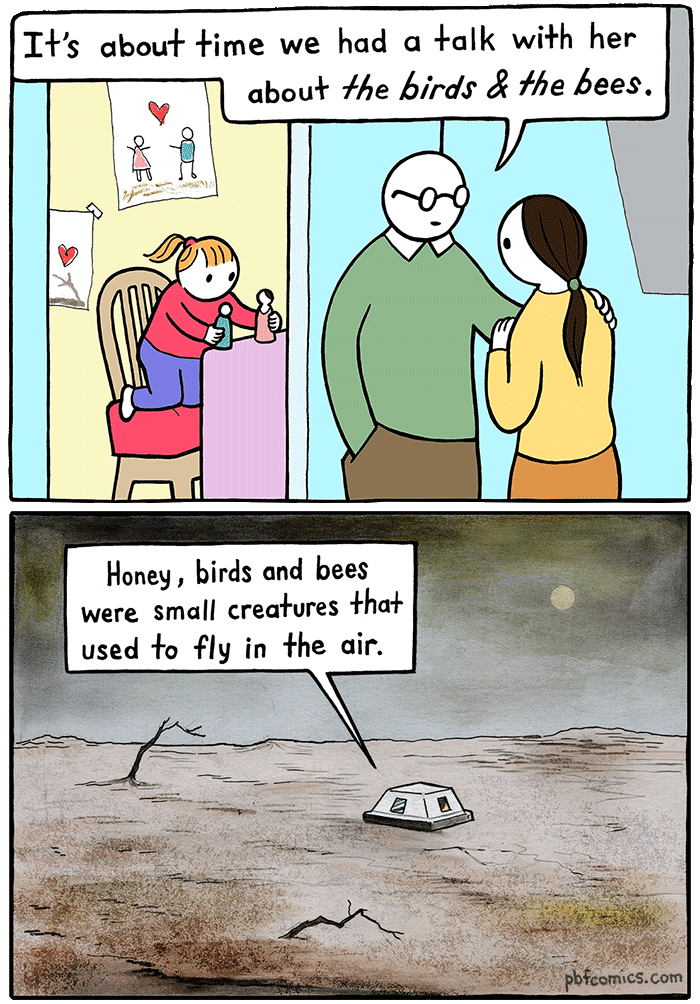
Rewriting Earth is a massive initiative and fantastic news for nature conservation. We cannot avoid imagining there is a bittersweet origin story for it. So, what sparked the creation of Rewriting Earth?
I’m an animal lover! Animals > people IMO! As a long-time writer, filmmaker and (I kinda hate this term) entrepreneur, I’ve spent many years ghost writing comedy for comedians, and I thought I could apply that ability for the planet – basically taking science and environmental issues to the mainstream through truly entertaining stories. Basically, making it more fun!!
Why were comics chosen as the main medium to get your message across?
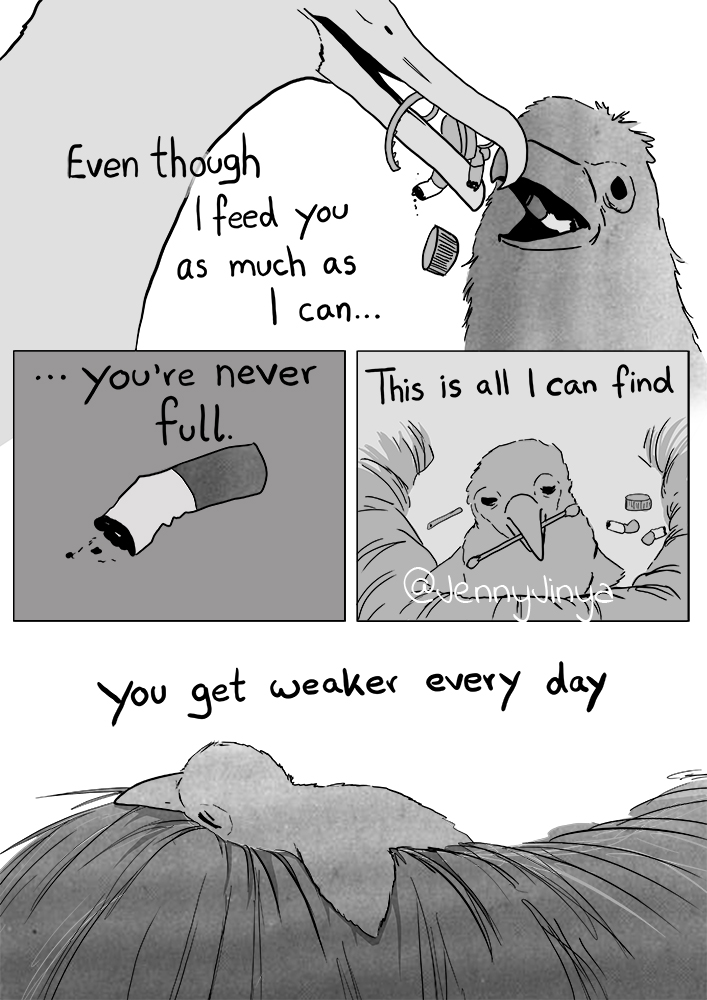
As soon as I saw Jenny Jinya’s ‘Little Mo’ comic,[4] I knew comics offered a completely new way of reaching audiences and making them care about animals. Comics – especially Jenny’s – have this incredible ability to turn massive facts and numbers into heartfelt stories that often have me bawling my eyes out.
For example, if I tell you over 1 billion seabirds suffer and die from eating ocean plastics every year,[5],[6] that’s hard to imagine – hard to ‘feel’. But I challenge anyone not to be affected by Jenny’s comic, and I’ve had people from all over the world tell me that it was this comic that changed the way they felt about single use plastics and cigarettes.
Once I saw what Jenny was doing, I decided that turning climate and animal facts into comics was the way to go. So, I conceived the idea of making a comic anthology whereby the world’s biggest stars, scientists, activists, NGO’s and more could tell their story with the world’s best comic creators – and that became our best-selling and Sunday Times Book of the Year, The Most Important Comic Book on Earth.[7]
From that, I realised that the format of creating climate stories as comics really worked, but I wanted to reach more people – people who couldn’t afford to buy our book. So, we transitioned into creating comics and content for social media – and Rewriting Earth (formerly Rewriting Extinction) was born.
The Most Important Comic Book on Earth was organized in main themes such as ‘Protect’ and ‘Inspire’. How did the creation process for the comics worked? Did the creatives have full freedom or were some topics specifically requested? Also, did the creatives had help from scientists?
All of our content is backed by science and experts in their field. We work with voices from all over the planet, from climate scientists, to UN Ambassadors, to spiritual leaders, to politicians, to those struggling to survive as their climate breaks down… All the stories we make are honest collaborations.
The stars involved were all speaking on subjects they have authority on. Things they care about and want the world to know. We undertook a brainstorm for each comic (over 100 actually) where we’d get on a Zoom meeting with the stars, relevant experts, writers and artists, and between us create the core concept, live. Each comic represents what the collective creators wish the world would know and understand about a particular environmental matter, or species. Critical to this is that our stories are NOT ‘educational’ or ‘worthy’, they’re wonderful, stupid, ridiculous, hilarious, terrifying… all the good things a story should be.
How did you manage to bring so many different and influential people together under the Rewriting Earth banner?
Honestly…? I just annoyed them until they gave in. Like most people, I started with the people I knew. Charlie Adlard and Rob Williams deserve a lot of credit, they really came to bat for this. And Rob introduced me to Will Dennis who then opened the project up to the US creators. Managing 300 creators was really tough, but I have to just say, they were amazing. They sacrificed so much, and gave so much of themselves to this. It’s truly humbling. I owe them a greater debt than I could ever repay.
Getting 15 charities and 300 contributors to work together was probably the hardest thing I’ve ever done. It was constant plate-spinning whereby I’d bring on one celeb or one charity, then use that as credibility to talk to the next person, and again and again and again until we had a massive collection of unbelievable names and people involved. To give you some idea, I’ve racked up over 2,000 hours of video calls, and 22,000 emails to get us to where we are now… I’ve basically hassled, pressured, begged, pleaded, and blackmailed Rewriting Earth into existence.
Rewriting Earth was a recent re-branding of the original name: Rewriting Extinction. What was the reason for this change? Does that mean a shift in focus or is it a strategic decision for attracting more attention to the project and the cause?
To be honest, it was because people were confusing us with Extinction Rebellion.[8] So, it was a name change only – our mission and purpose remain exactly the same.
On your website, it is said that Rewriting Earth aims to reach across political and cultural divides. Things have become overly polarized of late and anything that is even slightly nature-friendly is now seen as “leftist”. How do you manage to balance your message and reach across audiences? We’re asking for a friend, of course.
We have always been a-political and non-judgemental. Being preachy is counter-productive for the stories we are telling. For us it’s all about emotion, about moving people to feel something about an environmental issue perhaps they’ve never heard about before. If we can create mass public engagement and a groundswell of awareness, we could start seeing environmentalism in the same way as the pride movement and BLM, where supermarkets and shops and schools are devoting time and love to it.
The Rewriting Earth campaign is built around a focus on “getting it done” and Laguna Grande Reserve in Guatemala is not only an example of this but also a major success story.[9] Could you tell our readers how that story unfolded and if there are similar projects ongoing or planned?
From the beginning we have enjoyed an incredible partnership with The World Land Trust. Together we managed to raise around $2m and use that to buy Laguna Grande in Guatemala, gifting it back to the families of indigenous peoples who lived there, so it, and the 625 endangered species who live there, will be safeguarded forever. I still get a bit emotional about it.
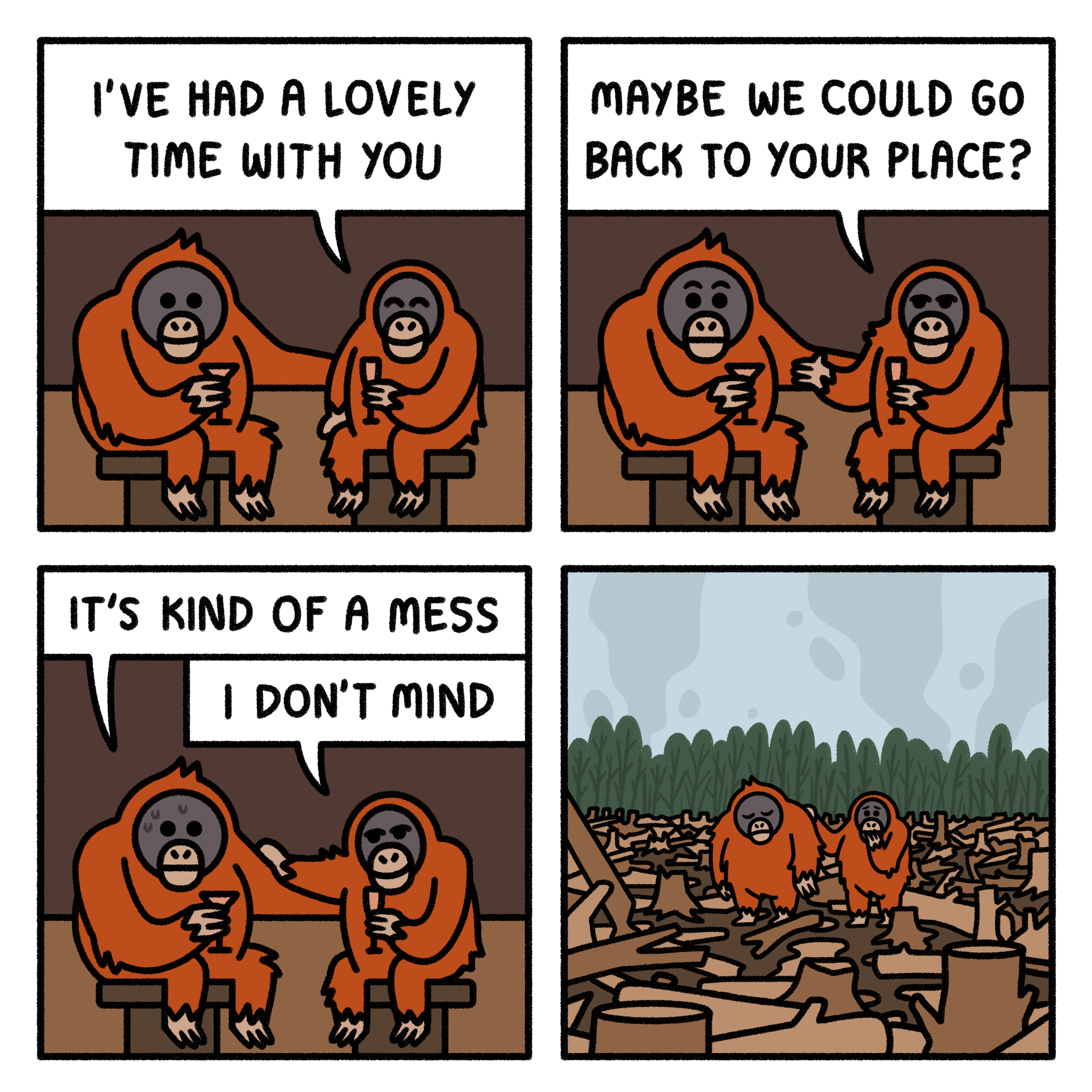
Still using Laguna Grande as an example, we see that there was a large focus on the protection of species of mammals and birds. We understand that is considered the most surefire way to get people’s attention, but the vast majority of biodiversity is made up of other organisms. What kind of strategy do you apply for dealing with the preservation of “uncharismatic” species such as invertebrates and fungi?
If they’re important to the planet,[10] they’re important to us. It goes back to being non-judgmental and wanting to highlight the best projects out there, resulting in the best solutions for the planet.
So, what’s next for Rewriting Earth? How to keep the ball rolling? And how can each of us “get it done” and help our fellow species and our only planet?
Follow @rewritingearth on Instagram, Facebook and X/Twitter! We’ll keep showing content from the best comic creators, comedians, experts, and activists across the world.
A lot of people probably know us for telling a celebrity’s story through comics, which was natural for some celebrities and not natural for others. Now we’re moving into telling stories through video, having fun finding new ways of getting into the media cycle, like the Oblivia Coalmine video for Make My Money Matter.[11]
For me, I think we need to learn from things like the gym industry, because when I was growing up, a gym was where fit people went to get fitter. Over the last 20 years, the gym has become somewhere you go to be healthy, and it doesn’t matter if you’re going on a treadmill or you’re basically bench pressing 300, you’re all welcome. Not everyone has to lift the same weight, but everyone does have to be in the gym.
People nowadays tend to be time-poor and would almost rather give us their money than their attention. If we want to reach the biggest possible audience, we have to basically give people as much value for their attention as we physically can, like an exchange at a shop. I work on the smallest exchanges on the spectrum, the 40 seconds or less, the quick, pick-up-read-it-on-the-train-forward-it-in-your-WhatsApp groups. Video, music, computer games, board games, anything that can basically put a welcoming arm around people and make it easy for them to come into environmentalism.
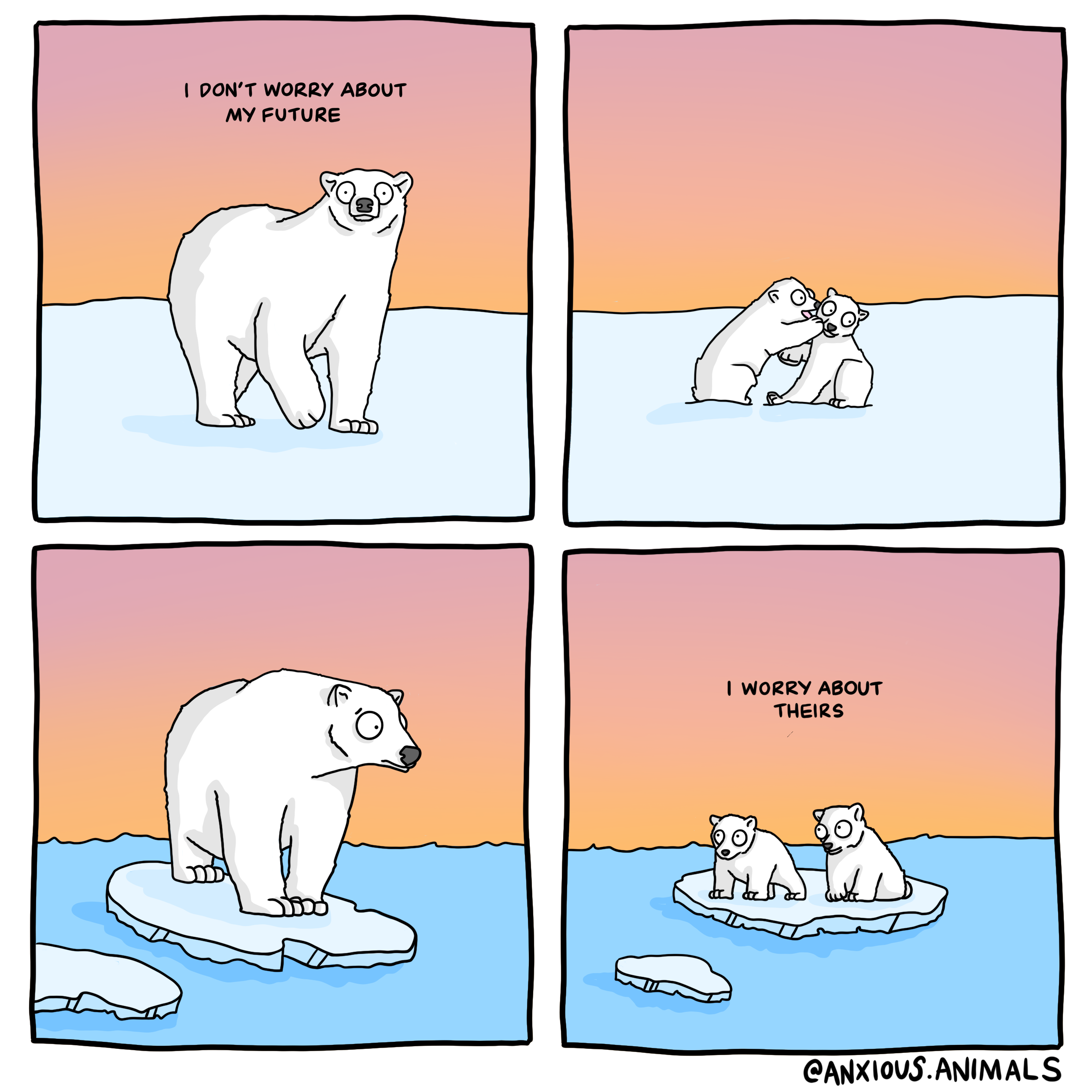
About the interviewee
Paul Goodenough is an award-winning, purpose-driven storyteller and entrepreneur, working in the environmental, charity, peace-building and entertainment sectors.
For over two decades, Goodenough has founded and led topflight creative agencies. He launched his first digital agency, Aerian Studios, at the age of 18, enlisting older family and friends to pose as him at meetings, convinced potential clients would be put off by his youth. Aerian Studios went on to become one of the most respected agencies in the UK, creating industry-leading campaigns, websites, products and mobile apps for the BBC, CNN, Warner Bros, Sky, Vodafone, BAFTA, the UK Government and many more.
In 2011, Goodenough founded the production company GBK Hybrid with Star Wars producer Gary Kurtz and Iron Giant and Disney animator Richard Bazley. Goodenough was nominated for an Emmy in 2015 for his work as a producer on the 2015 multi-award-winning TV Movie Lost Treasure Hunt.
In 2019, Goodenough co-founded Rewriting Earth (formerly Rewriting Extinction). Now an independent charity, Rewriting Earth began as a 12-month cross-charity project raising money and awareness for the climate and biodiversity crisis, using the powerful storytelling medium of comics and videos. Goodenough single-handedly forged collaborations between 300+ celebrities, comic artists and experts to create high-impact environmental stories delivering clear information to mainstream audiences. Within 12 months, Rewriting Earth raised £1.54m for the different charities involved, helping to protect 662 species with important milestones, like helping the World Land Trust purchase and protect Guatemala’s Laguna Grande Reserve. The project was recognised for reaching a wide, global audience, attaining over 150m engagements with people not traditionally engaged in environmental issues.
The Most Important Comic Book on Earth (Dorling Kindersley) – an anthology of all Rewriting Extinction comics – was published in October 2021, becoming an instant bestseller and a Sunday Times Book of the Year 2021.
Image usage
The comics used in this article were kindly provided by Rewriting Earth. Please do not reproduce them without first checking for permission.
[1] The literature on this topic is vast, but see, for instance: Lu, H. (2023) Comparing the effectiveness of different consensus messages in communicating global environmental issues: the role of referent groups, emotions, and message evaluation. Journal of Environmental Psychology 88: 102025.
[2] See, e.g.: Kazdin, A.E. (2009) Psychological science’s contributions to a sustainable environment: extending our reach to a grand challenge of society. American Psychologist 64: 339–356.
[3] See, e.g.: Kolandai-Matchett, K. & Armoudian, M. (2020) Message framing strategies for effective marine conservation communication. Aquatic Conservation 30: 2441–2463.
[4] Please read it in full at: https://www.instagram.com/p/CuXRey3Kc9x/
[5] Nine out of ten seabirds have plastics in their digestive system. By 2050, all of them will have plastics. Reference: Wilcox et al. (2015) Threat of plastic pollution to seabirds is global, pervasive, and increasing. Proceedings of the National Academy of Sciences 112: 11899–11904.
[6] For seabirds, there is a 20% chance of lifetime mortality from ingesting a single piece of plastic. Reference: Roman et al. (2019) A quantitative analysis linking seabird mortality and marine debris ingestion. Scientific Reports 9: 3202.
[7] If you’re interested, please check https://linktr.ee/mostimportantcomic
[8] Here’s their website, if you’re interested: https://rebellion.global/
[9] You can see the original project at: https://rewriting.earth/projects/world-land-trust/
[10] Biologist E. O. Wilson used a very apt term to refer to them: “the little things that run the world” (Wilson, 1987: Conservation Biology 1: 344–346).
[11] Great video btw: https://makemymoneymatter.co.uk/oblivian/


 Journal of Geek Studies