Rodrigo B. Salvador1 & Carlo M. Cunha2
1Zoology Unit, Finnish Museum of Natural History, University of Helsinki, Helsinki, Finland.
2Museu de História Natural e da Ciência da Universidade do Porto (MHNC-UP) / PRISC, Porto, Portugal.
Emails: salvador.rodrigo.b (at) gmail (dot) com; carlomagenta (at) gmail (dot) com
There is a new sea slug around: Fushi from Cosmic Princess Kaguya! (超かぐや姫!or Chō Kaguya-hime!). This new feature-length anime film by Studio Colorido & Studio Chromato (2026) was inspired by the ‘Tale of the Bamboo Cutter’, often known as the ‘Tale of Princess Kaguya’. Dating back to the late 9th or early 10th century of Japan, it is one of the oldest stories in the world to contain elements of science fiction (Minamide, 2024).

The Tale of Princess Kaguya is very well-known and widely adapted in modern times, but Cosmic Princess Kaguya! Reimagines it in a near-future setting that alternates between the protagonists’ lives in the real world and in the virtual world. In the film, there is a sprawling virtual realm called Tsukuyomi; it is the type of virtual reality that has become a staple of fiction, being largely game-like but not just a VR MMORPG (the most similar examples that immediately come to mind are the 2009 anime Summer Wars and the 2011 novel Ready Player One).
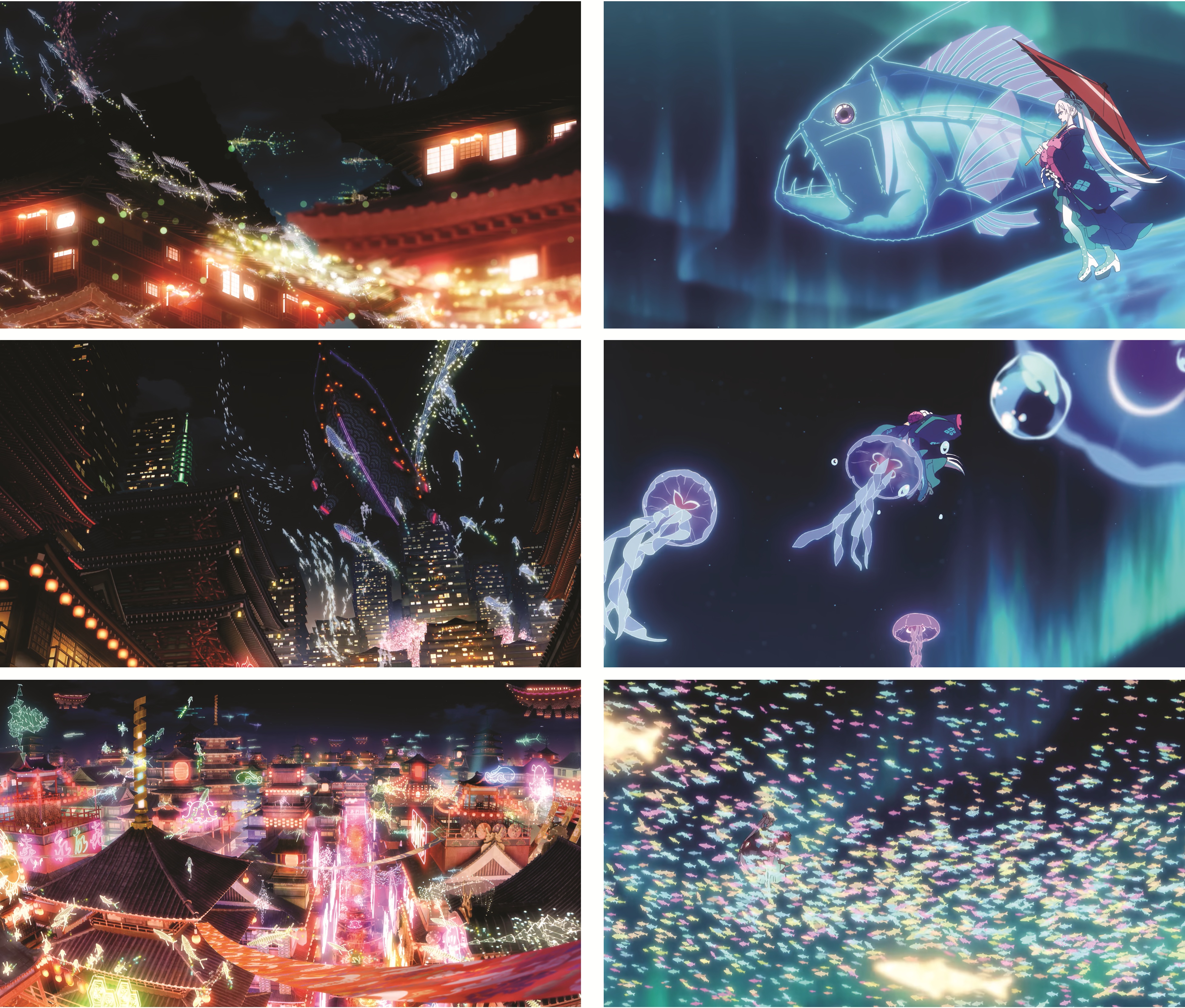
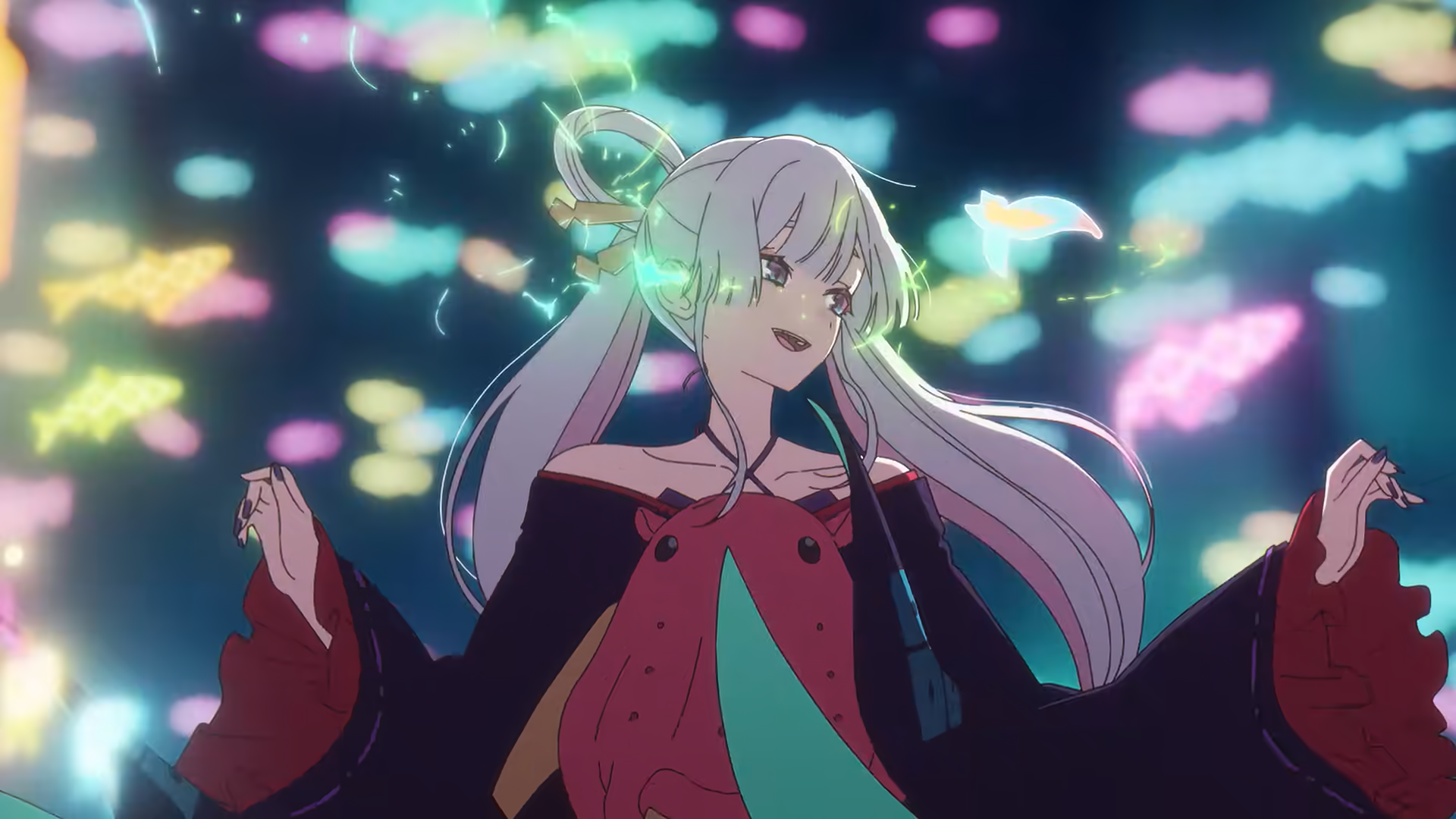
Tsukuyomi is a world led by a Hatsune Miku-like AI called Yachiyo, and it has a traditional Japanese aesthetic infused with sea life (Fig. 2; see also the interview with director Shingo Yamashita by Animate Times, 2026). The marine aspects have their own raison d’être, though we will not discuss that here. (Nor will we talk about the film’s story; it’s a new anime and we don’t want to give spoilers.) Rather, we will skip straight to Fushi, its sea slug star.
SEA BUNNIES IN JAPAN
Fushi (Fig. 3) belongs to a species of sea slug known as the sea bunny, whose scientific name is Jorunna parva. We will talk more about the biology of these creatures and other sea slugs later on, but for now, let’s focus on their pop culture aspects. In that regard, Fushi is the latest in a string of sea bunny mania that started a decade ago.
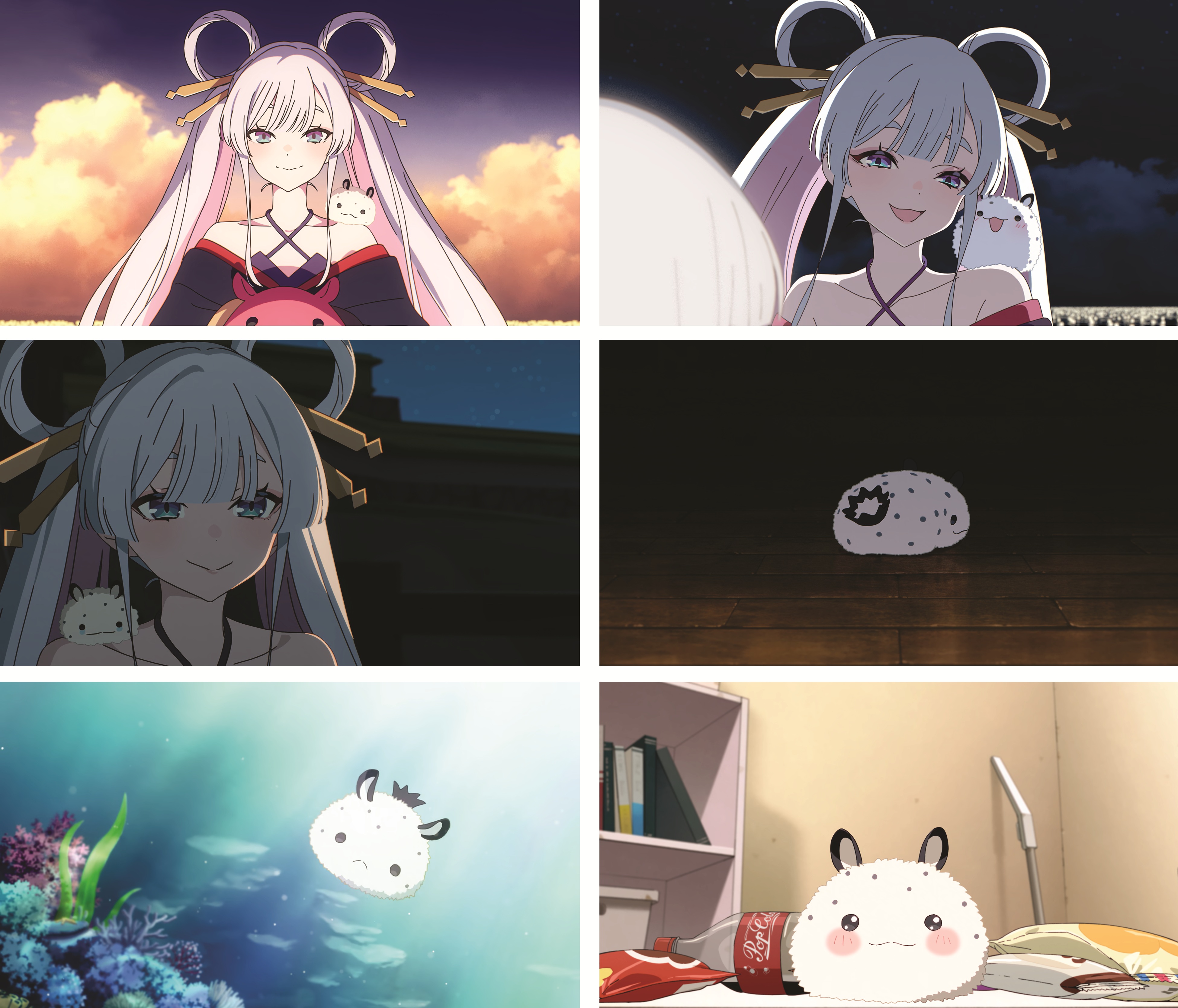
As with many things today, the sea bunny’s rise to fame was due to a viral post on social media. It is hard to pinpoint which post exactly started it all, but the fact is that by mid-2015 Japanese Twitter was full of posts of these impossibly adorable slugs (e.g., Kearns, 2015, who cited a now-defunct SoraNews24 article). Their furry appearance, with black-tipped “ears” and a fluffy “tail”, was an instant hit in Japan. As the birthplace and main bastion of kawaii culture (Nittono, 2016; Lieber-Milo & Nittono, 2019; May, 2019), that is not unexpected, of course; similar events happened in other instances, from capybaras (Thompson, 2016; Living in Japan, 2025) to Ancient Egyptian deities (Salvador, 2017). The sea bunny craze even seeped into global conversation later on, albeit only lightly so and for a brief period.
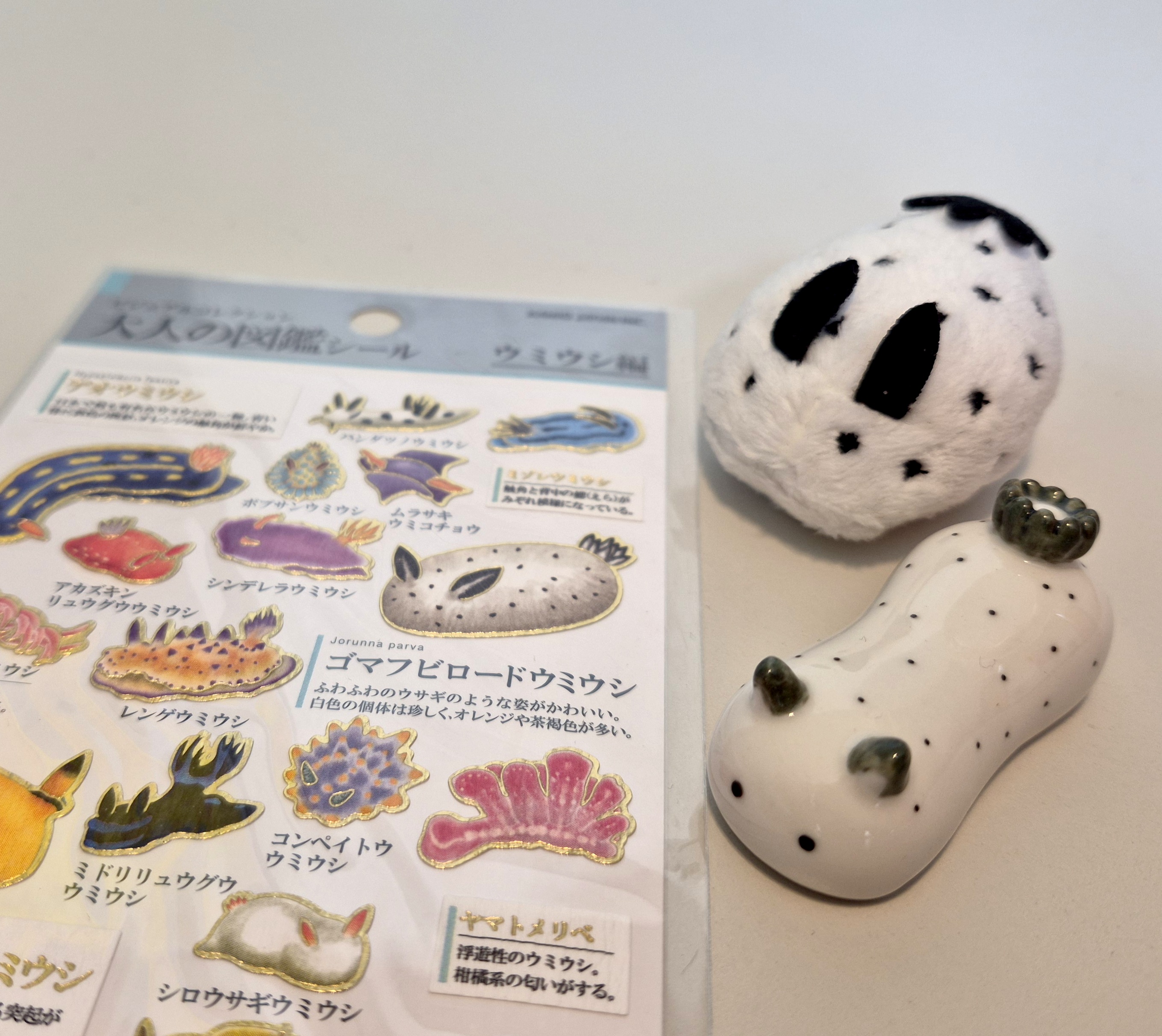
Expectedly, as with most viral things, it died off a while later. The sea bunny boom passed, but we believe it is safe to say that it left a lasting impression on pop culture. Sea bunnies retained their presence in the pantheon of kawaii animals, and now they are a common sight in souvenir shops and gashapon machines (Fig. 4), as well as making a few appearances in anime (Cosmic Princess Kaguya!) and video games (e.g., the mimic snow slugs in Honkai: Star Rail, though other nudibranch inspirations cannot be excluded).
Still, to this day and despite the sea bunny mania season, not much information on the actual animals was made available to readers. As researchers specializing in snails/slugs, we feel this is a good moment for us to do just that.
WHAT ARE SEA SLUGS?
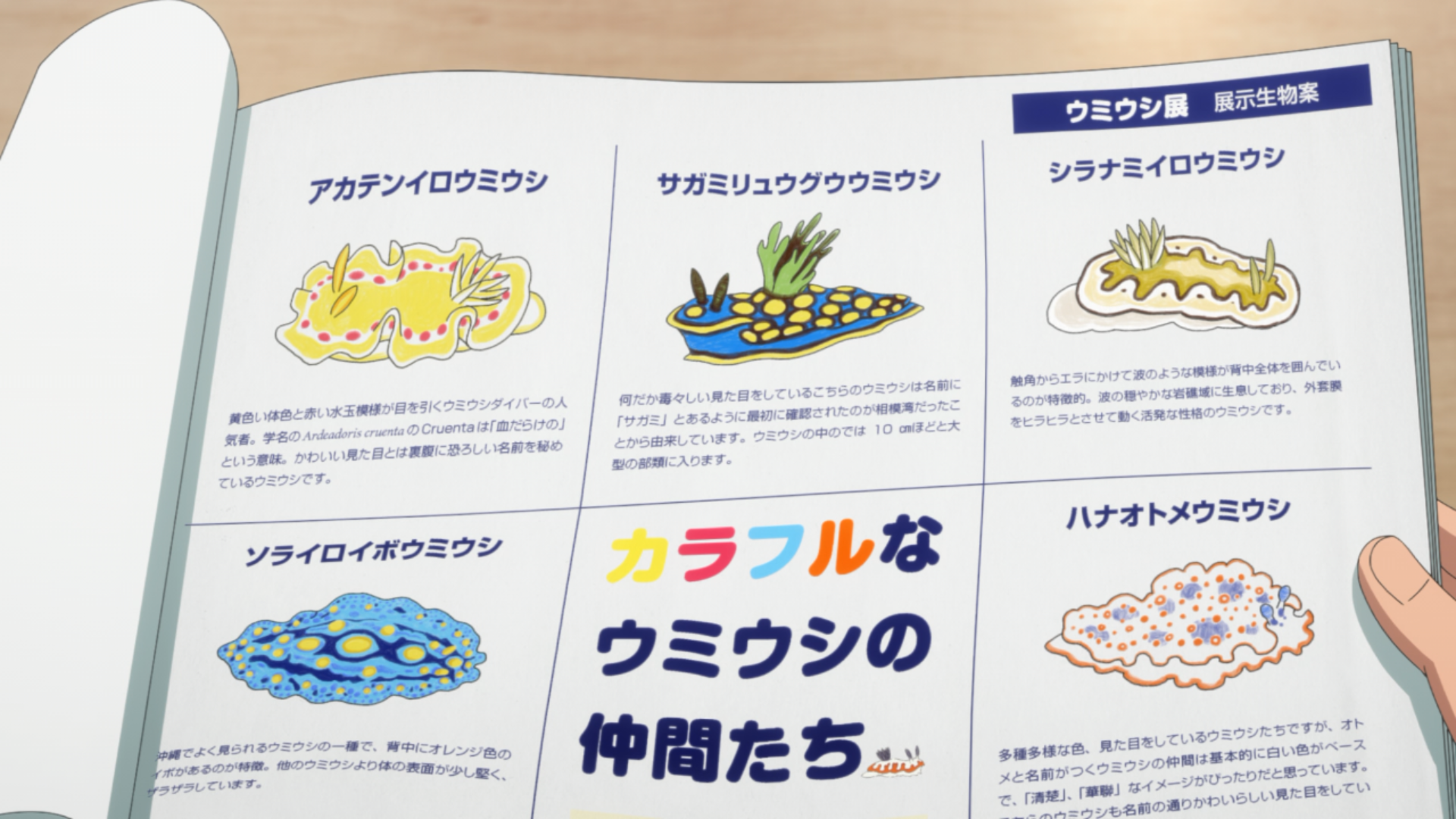
Sea bunnies have not been the only social media sensations during the past few years. Notable examples of other sea slugs doing the rounds include species with fancy names such as the blue sea dragon (Glaucus atlanticus) and the Spanish dancer (Hexabranchus sanguineus), as well as a handful of kawaii critters such as the sea sheep (Costasiella kuroshimae) and the “Pikachu slug” (Thecacera pacifica). Besides, these and other sea slugs are sometimes used as mascots in Japan (e.g., at Awashima Marine Park), as gashapon collectibles, or are featured in games and anime. The latter include, for example, Shellos/Gastrodon in Pokémon and real-world species in The Aquatope on White Sand (Fig. 5) (for an in-depth look at those, see Salvador & Cavallari, 2019 and Salvador & Kuroki, 2022, respectively). In fact, sea slug-inspired critters in electronic media can be traced back to the 16-bit era (Cavallari, 2015).
But what exactly is a sea slug? Just like their terrestrial slug counterparts, sea slugs are gastropod molluscs. If you still remember your high school biology, that means they belong to Class Gastropoda, which is part of Phylum Mollusca. Class Gastropoda contains animals living in the sea, in freshwater, and on land, which are commonly referred to as snails, slugs, limpets, and abalones.
There are around 70,000 species of gastropods that we know of, but scientists expect that many more still remain to be discovered (Rosenberg, 2014). Within Class Gastropoda, there is a subgroup known as Euthyneura, which contains approximately half of those species. The more complex nervous system and sensory organs of the euthyneurans allowed them to diversify in such a large group, attain a wide variety of body shapes, and live in many types of habitats, from sea to land (Brenzinger et al., 2021). All the lineages that we commonly refer to as ‘sea slugs’ are euthyneurans.
‘Sea slugs’ are not a restricted animal group like, say, ‘mammals’. Instead, it is a generic term that can refer to several different groups of marine gastropods that have a reduced shell or no shell at all. The term ‘sea slugs’ thus includes groups as diverse as sea hares, sacoglossans (a.k.a. solar-powered sea slugs), headshield slugs, sea angels, and nudibranchs (where Fushi, or rather sea bunnies, belong). There are over 3,000 known species of sea slugs worldwide (Rosenberg, 2014; Ono & Kato, 2020).
The Japanese word for sea slugs is umiushi (ウミウシ), which, taken literally, means ‘sea oxen’. These animals can be found worldwide, but the greatest diversity in terms of number of species can be found in warmer waters, such as the Indo-Pacific and the Caribbean. In Japan, there are over 1,000 known species, thanks in no small part to the warmer waters of Okinawa (Ono & Kato, 2020).
Most sea slugs are found in shallow waters, being somewhat easily accessible to people, from rockpoolers to recreational divers. They are often colourful and sometimes quite weird, but either way very photogenic and “instagrammable”. Those two aspects, when put together, contribute to their popularity and photos of them now abound in social media and also in community science platforms such as iNaturalist (Jensen, 2013; Hewitt et al., 2021).
Life without a shell
Snails are immediately recognizable animals because of their shell. A shell is a hard, calcareous exoskeleton (external skeleton) that provides the animal protection against predators and the environment.
Sea slugs (as well as terrestrial slugs) come from lineages that gradually lost (or greatly reduced) their shells, during millions of years of evolution. While being shell-less is considered to increase mobility (including swimming in some cases) and the ability to hide (Vermeij, 1993; Cameron, 2016; Ponder et al., 2020), like a rogue/thief compared to a bulky armoured fighter. However, being shell-less also makes the animal more vulnerable to attacks. Thus, it is common for slugs to “compensate” shell reduction/loss with other forms of defence (Beesley et al., 1998).
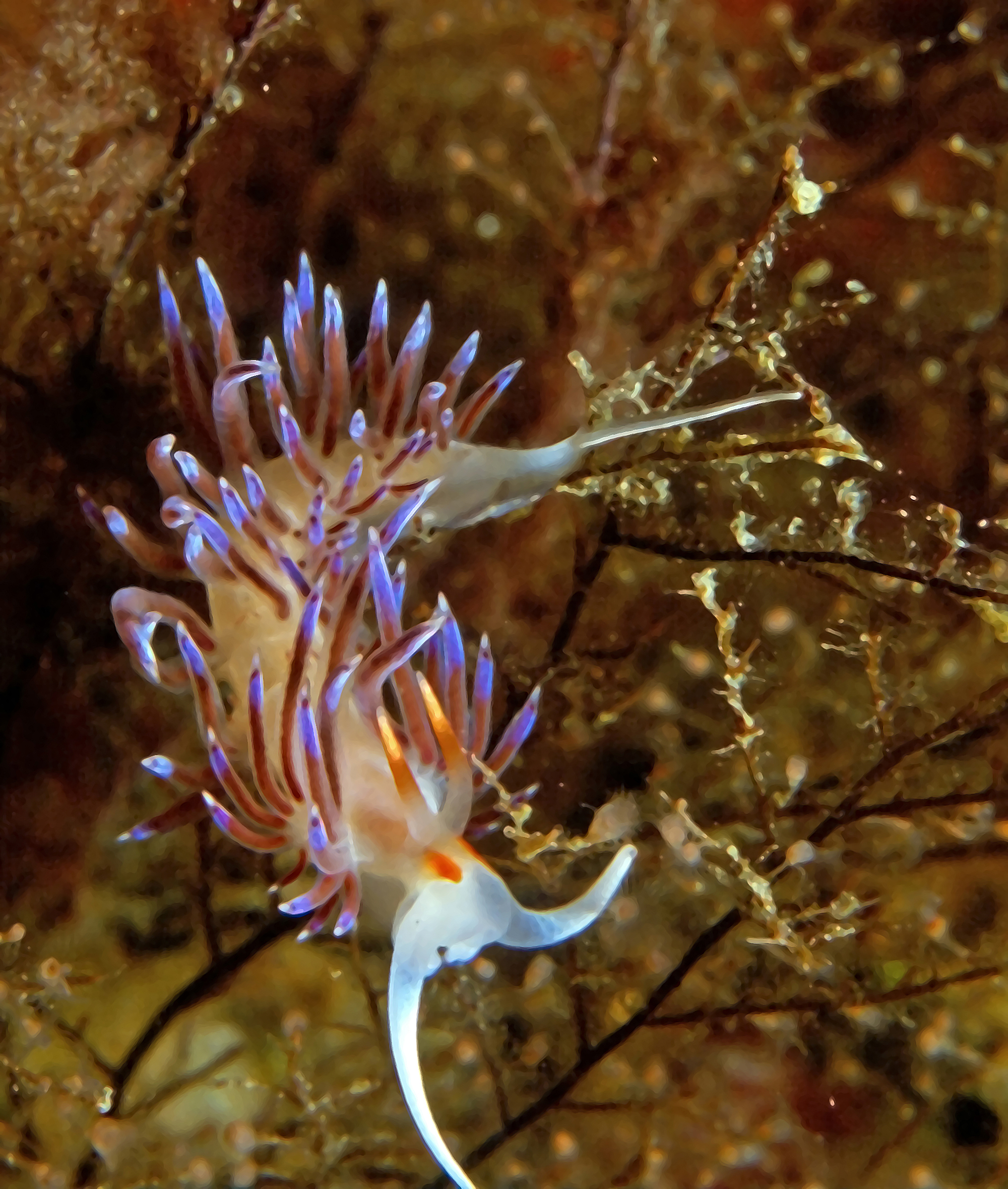
For sea slugs, this defence comes in the form of colour patterns, which can be linked either to camouflage or to chemicals (Debelius & Kuiter, 2007). While camouflage is very straightforward, the second strategy needs further explanation. Sea slugs feed on animals such as anemones, sponges and ascidians, and they can “steal” and deploy their prey’s stinging cells or toxins (Wägele & Klussmann-Kolb, 2005; Cheney et al., 2016) – truly the rogues of Phylum Mollusca. The bright colouration of sea slugs thus serves to “inform” predators that they possess such defences and are, therefore, not edible (Faulkner & Ghiselin, 1983; Aguado & Marin, 2007). Essentially, sea slugs’ colour patterns tell predators, “Do not approach!” or “Approach at your own risk!”. This is known in biology as ‘aposematism’, or ‘warning colouration’ (Fig. 6).
The toxins in some nudibranchs can kill predators like fish and crustaceans (Debelius & Kuiter, 2007). In fact, it is considered that chemical defences arose first and, after it was “powerful” enough, losing the shell was not that big of a deal, so to speak (Faulkner & Ghiselin, 1983). Nudibranch defences are considered one of the most overpowered in the animal kingdom; they have comparatively very few predators, particularly considering their typically small size and apparent vulnerability.
Some sea slugs can even steal other types of cells. Sacoglossans steal chloroplasts from algae and can keep them functional for a time, granting themselves the ability to photosynthesize (Cartaxana et al., 2021; Maeda et al., 2021). That feat gives them their common name ‘solar-powered sea slugs’ and one species, the sea sheep (Costasiella kuroshimae), also went somewhat viral on social media some years ago (Salvador & Kuroki, 2022).
Box 1. Healing toxins?
The study of sea slug toxins is revealing various substances with medicinal value, such as the tambjamines, found in slugs of the genus Tambja (Pereira et al., 2012; Takaki et al., 2021) and which are being studied for multiple applications, including as antimalarials (Kumar et al., 2024). Another example are the powerful natural compounds found in sea hares of the genus Aplysia. Scientists have discovered that the defensive ink of one species of sea hare, Aplysia punctata, contains a special protein called APIT. This protein has an impressive ability: it can trigger the death of tumour cells while largely sparing healthy ones (Butzke et al., 2004). Discoveries like this show how studying marine life can also lead to exciting advances in medicine.
Jorunna parva
Sea bunnies are nudibranchs (Order Nudibranchia, mixing the Latin word for ‘naked’ and the Greek word for ‘gills’). More specifically, they belong to a subgroup known as ‘dorid nudibranchs’ (Fig. 7).
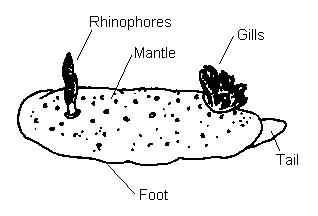
The scientific name of the sea bunny species is Jorunna parva. The word ‘parva’ comes from the Latin and means little. And little it is – adult animals reach only about 2.5 cm in length (Ono & Kato, 2020).
In Japanese, the species is known as gomafu biroodo umiushi (ゴマフビロードウミウシ; Ono & Kato, 2020), which translates to ‘spotted (or sesame) velvet sea slug’. Its vernacular name in English is ‘peppercorn velvet dorid’. However, after its social media hype, the species became known as sea rabbit (umiusagi, 海ウサギ) in Japanese or sea bunny in English. Its bunny status is also further recognized in the overall lunar theme of Cosmic Princess Kaguya! After all, rabbits are intrinsically linked to the moon in Japanese folklore. Kaguya, being a moon denizen, brings rabbit-inspired touches to her design (e.g., the “ears” of her Tusukuyomi avatar) and that naturally extends to Fushi (an actual moon bunny, so to speak).
The body of a sea bunny is covered by cilia-like projections, some of which are black (Ono & Kato, 2020); this is what gives the animal its “furry” appearance (Fig. 8). These structures are called ‘caryophyllidia’, being more rod-like than hair-like in shape, and are thought to have a sensory role, though that is not certain (Camacho-García & Gosliner, 2008). The fluffy “tail” is actually the animal’s gills, which can be either black and white or completely black. Finally, the black-tipped rabbit “ears” are structures called ‘rhinophores’, which are chemosensory organs. That means these organs detect chemicals in the water and are thus, mainly responsible for these animals’ senses of taste and smell.
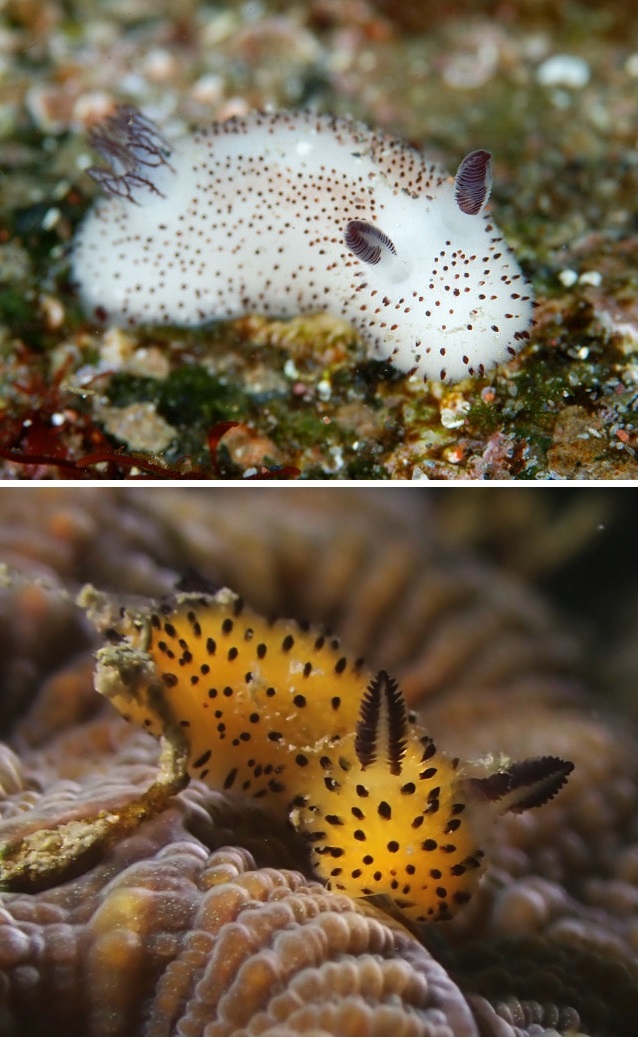
Jorunna parva was first discovered in 1937 and then described, in an academic paper, in 1938 by Kikutaro Baba, the leading researcher on sea slugs and bubble snails in Japan. A single animal was found by him in 1937, in the then-called Kii Province (Wakayama Prefecture), and his original description says it was yellow (Baba, 1938).
In fact, sea bunnies are often yellow or light brown, sometimes orange, and only rarely white (Ono & Kato, 2020). The dotted patterns of their backs can also vary. We really recommend you go to the species’ page in Seaslug World (https://seaslug.world/species/jorunna_parva) and see all the colours. However, researchers are still unsure if the different colours and patterns represent different species or not.
In any event, the species as understood now is widely distributed: it is known with certainty from Japan (from central Japan down to Okinawa), the Philippines, Papua New Guinea, Seychelles and the southeastern coast of Africa (Camacho-García & Gosliner, 2008; Gosliner et al., 2023), though online records point to a wider distribution in the Indo-Pacific. They inhabit shallow waters, typically averaging 12 m deep (Ono & Kato, 2020).
We do not know much about their life, though. Like other nudibranchs, they are hermaphroditic, and both individuals can be fertilized during mating. It is also supposed to have toxins acquired from the sponges they feed on (Gosliner, 1994).
Finally, another species of the genus Jorunna often seen in social media posts and as souvenirs/collectibles is the panda sea slug (Jorunna funebris), also from the Indo-Pacific. This species looks similar overall to J. parva but is white with black circles (hence its common name), but it is even tinier, reaching only about 1.5 cm in length (Ono & Kato, 2020).
THE FUTURE OF SEA SLUGS
Cutesy animals are not a new thing in animated films, but in the vast majority of Pixar-and-similar cases, ‘animal’ equals ‘mammal’. Statistically, mammals represent close to zero percent of the total number of animal species on our planet. Yes, zero; there are very few mammal species around and yet, they are severely over-represented. Thus, any animations, games, etc. that feature other types of animals are very welcome, because they let people discover other facets of the diversity of life.
Our planet is –at least for now– full of wonders, and we can only hope that we have convinced you that sea slugs are among those wonders. We can say that sea bunnies (and by extension sea slugs in general) have become somewhat established in pop culture, at least in Japan; though the boom has passed, they now have a stable presence. It would be great if that position also became the norm in other parts of the world where beautiful and colourful sea slugs can be found. The power of kawaii is undeniable (Nittono et al., 2012; Nittono, 2016; MacPherson & Bryant, 2018), and perhaps it can be harnessed for nature conservation (Ramiel, 2020).
Marine ecosystems are rich and diverse, often composed of life forms that we do not usually notice but which are constantly interacting with and depending on one another. Those interactions keep the ecological balance of these often-fragile ecosystems, which face a myriad of human-induced threats, from climate change to microplastics and habitat destruction by fishing (Crain et al., 2009; Marques, 2020; Hobohm et al., 2021). When such ecosystems collapse, they can generate a cascading effect, starting a chain collapse in large areas (Roberts, 2007; Daskalov et al., 2016; Marques, 2020).
Protecting these ecosystems is therefore crucial for our own continued well-being on this planet, and conservation efforts include raising public awareness. The motto “knowing to care” is at the core of conservation efforts, after all (Clayton & Meyers, 2009). This awareness process can be enhanced and even accelerated when a species resonates with people, as we hope is the case with sea bunnies. Caring for the habitat of an animal we are fond of is something that comes naturally to most people, and such a stance can have positive impacts in the conservation of entire ecosystems (Clayton & Meyers, 2009).
REFERENCES
Aguado, F. & Marin, A. (2007) Warning coloration associated with nematocyst-based defences in aeolidiodean nudibranchs. Journal of Molluscan Studies 73: 23–28.
Animate Times. (2026) [Interview with Director Shingo Yamashita of “Cosmic Princess Kaguya!”]. Animate Times. Available from: https://www.animatetimes.com/news/details.php?id=1768959910 (Date of access: 12/Apr/2026). [In Japanese.]
Baba, K. (1938) Opisthobranchia of Kii, Middle Japan. Journal of the Faculty of Agriculture, Kyushu University 6: 1–19.
Brenzinger, B.; Schrödl, M.; Kano, Y. (2021) Origin and significance of two pairs of head tentacles in the radiation of euthyneuran sea slugs and land snails. Scientific Reports 11: 21016.
Beesley, P.L.; Ross, G.J.B.; Wells, A. (1998) Mollusca: The Southern Synthesis. CSIRO, Collingwood.
Butzke, D.; Machuy, N.; Thiede, B.; et al. (2004) Hydrogen peroxide produced by Aplysia ink toxin kills tumor cells independent of apoptosis via peroxiredoxin I sensitive pathways. Cell Death & Differentiation 11: 608–617.
Cameron, R. (2016) Slugs and Snails. William Collins, London.
Cartaxana, P.; Rey, F.; LeKieffre, C.; et al. (2021) Photosynthesis from stolen chloroplasts can support sea slug reproductive fitness. Proceedings of the Royal Society B. 288: 20211779.
Cheney, K.L.; White, A.; Mudianta, I.W.; et al. (2016) Choose your weaponry: selective storage of a single toxic compound, latrunculin A, by closely related nudibranch molluscs. PLOS ONE 11: e0145134.
Clayton, S. & Myers, G. (2009) Conservation Psychology: Understanding and Promoting Human Care for Nature. Wiley-Blackwell, Hoboken.
Crain, C.M.; Halpern, B.S.; Beck, M.W.; Kappel, C.V. (2009) Understanding and managing human threats to the coastal marine environment. Annals of the New York Academy of Science 1162: 39–62.
Daskalov, G.M.; Boicenco, L.; Grishin, A.N.; et al. (2016) Architecture of collapse: regime shift and recovery in an hierarchically structured marine ecosystem. Global Change Biology 23: 1486–1498.
Camacho-García, Y.E. & Gosliner, T.M. (2008) Systematic revision of Jorunna Bergh, 1876 (Nudibranchia: Discodorididae) with a morphological phylogenetic analysis. Journal of Molluscan Studies 74: 143–181.
Debelius, H. & Kuiter, R.H. (2007) Nudibranchs of the World. IKAN, Frankfurt am Main.
Faulkner, D.J. & Ghiselin, M.T. (1983) Chemical defense and evolutionary ecology of dorid nudibranchs and some other opisthobranch gastropods. Marine Ecology Progress Series 13:295–301.
Gosliner, T.M. (1994) Gastropoda: Opisthobranchia. In: Harrison, F. & Kohn, A. (Eds.) Microscopic Anatomy of Invertebrates, Mollusca. John Wiley & Sons, New York. Pp. 253–355.
Gosliner, T.M.; Jones, G.; Beasley, L.; et al. (2023) Southern African Sea Slugs. Southern Underwater Research Group Press, Cape Town.
Hewitt, S.J.; Picton, B.E.; DuPont, A.; et al. (2021) New records of marine molluscs from Saba, Caribbean Netherlands. Basteria 85: 59–72.
Hobohm, C.; Schaminée, J.; van Rooijen, N. (2021) Coastal habitats, shallow seas and inland saline steppes: ecology, distribution, threats and challenges. In: Cabin, R.J. (Ed.) Environmental Challenges and Solutions. Springer, Cham. Pp. 279–310.
Jensen, K.R. (2013) Sea slugs – divers’ favorites, taxonomists’ problems. Aquatic Science & Management 1: 100–110.
Kearns, L. (2015) Fluffy bunny sea slugs make us want to cuddle them. HuffPost. Available from: https://www.huffpost.com/entry/fluffy-bunny-sea-slugs_n_55a6cb53e4b0896514d04233 (Date of access: 13/Apr/2026).
Kumar, A.; Li, Y.; Dodean, R.A.; et al. (2024) Tambjamines as fast-acting multistage antimalarials. ACS Infectious Diseases 10: 4291–4300.
Lieber-Milo, S. & Nittono, H. (2019) From a word to a commercial power – A brief introduction to the kawaii aesthetic in contemporary Japan. Innovative Research in Japanese Studies 3: 13–32.
Living in Japan. (2025) How Japan fell in love with the world’s largest rodent. Jobs in Japan. Available from: https://jobsinjapan.com/living-in-japan-guide/how-japan-fell-in-love-with-the-worlds-largest-rodent/ (Date of access: 13/Apr/2026).
MacPherson, I. & Bryant, T.J. (2018) Softening power: cuteness as organizational communication strategy in Japan and the West. Journal of International and Advanced Japanese Studies 10: 39–55.
Maeda, T.; Takahashi, S.; Yoshida, T.; et al. (2021) Chloroplast acquisition without the gene transfer in kleptoplastic sea slugs, Plakobranchus ocellatus. eLife 10: e60176.
Marques, L. (2020) Collapse of biodiversity in the aquatic environment. In: Marques, L. (Ed.) Capitalism and Environmental Collapse. Springer, Cham. Pp. 275–301.
May, S. (2019) The Power of Cute. Princeton University Press, Princeton.
Minamide, Y. (2024) Japan’s oldest tale is a woman-centric sci-fi. Medium. Available from: https://medium.com/teatime-history/japans-oldest-tale-is-a-woman-centric-sci-fi-38e417644d57 (Date of access: 12/Apr/2026).
Nittono, H. (2016) The two-layer model of ‘kawaii’: a behavioural science framework for understanding kawaii and cuteness. East Asian Journal of Popular Culture 2: 79–95.
Nittono, H.; Fukushima, M.; Yano, A.; Moriya, H. (2012) The power of kawaii: viewing cute images promotes a careful behavior and narrows attentional focus. PLOS ONE 7: e46362.
Ono, A. & Kato, S. (2020) 新版 ウミウシ: 特徴 がひと目でわかる図解付き. Nudibranchs & Sea Slugs Illustrated. Seibundo Shinkosha, Tokyo.
Pereira, F.R.; Berlinck, R.G.S.; Rodrigues Filho, E.; et al. (2012) Metabólitos secundários dos nudibrânquios Tambja stegosauriformis, Hypselodoris lajensis e Okenia zoobotryon e dos briozoários Zoobotryon verticillatum e Bugula dentata da costa do Brasil. Química Nova 35: 2194–2201.
Ponder, W.F.; Lindberg, D.R.; Ponder, J.M. (2020) Biology and Evolution of the Mollusca. Vol. 2. CRC Press, Boca Raton.
Ramiel, E. (2020) An ecological case for cuteness. Edge Effects. Available from: https://edgeeffects.net/ecologies-of-cuteness/ (Date of access: 13/Apr/2026).
Roberts, C. (2007) The Unnatural History of the Sea. Shearwater, Washington, D.C.
Rosenberg, G. (2014) A new critical estimate of named species-level diversity of the recent Mollusca. American Malacological Bulletin 32: 308–322.
Salvador, R.B. (2017) Medjed: from Ancient Egypt to Japanese Pop Culture. Journal of Geek Studies 4(2): 10–20.
Salvador, R.B. & Cavallari, D.C. (2019) Pokémollusca: the mollusk-inspired Pokémon. Journal of Geek Studies 6(1): 55–75.
Salvador, R.B. & Kuroki, K. (2022) The sea slugs of Shiroi Suna no Aquatope. Journal of Geek Studies 9(1): 15–28.
Takaki, M.; Freire, V.F.; Nicacio, K.J.; et al. (2021) Metabolomics reveals minor tambjamines in a marine invertebrate food chain. Journal of Natural Products 84: 790–796.
Thompson, N. (2016) Japan’s love affair with capybaras. Global Voices. Available from: https://globalvoices.org/2016/06/14/japans-love-affair-with-capybaras/ (Date of access: 13/Apr/2026).
Vermeij, G. (1993) A Natural History of Shells. Princeton University Press, Princeton.
Wägele, H. & Klussmann-Kolb, A. (2005) Opisthobranchia (Mollusca, Gastropoda) – more than just slimy slugs. Shell reduction and its implications on defence and foraging. Frontiers in Zoology 2: 3.
About the authors
Dr Rodrigo Salvador specializes in researching snails and slugs, though those are typically the terrestrial ones. Still, he is fascinated by sea slugs and his collection of umiushi souvenirs grows almost by an order of magnitude every time he goes to Japan.
Dr Carlo Cunha might not the biggest anime fan around, but he compensates for it by being a specialist in the study of all kinds of sea slugs.