Gabriel Ribeiro de Melo & Helba Helena Santos Prezoto
Centro Universitário Academia – UniAcademia, Juiz de Fora, Minas Gerais, Brazil.
Emails: gacornirm (at) gmail (dot) com; helbaprezoto (at) uniacademia (dot) edu (dot) br
In the video game industry, technical knowledge of the production subject is very important in the planning stages. In matters of creature design, it is important to know biology, anatomy and ecology to create realistic animals, as despite being a work of fiction, the developers want the audience to “believe” those animals are real, at least while they’re immersed in that fictional world, according to Diego Peres (course “Pintura Digital: o Método”), a professional in this field.
The use of realistic animals in video games is an efficient kind of science communication, especially in the areas of diversity, ecology, evolution and ethology, making complex concepts more accessible and captivating for various audiences. These fantasy animals may represent natural phenomena, endangered species or scientific concepts, incentivizing interactive and recreational learning. Therefore, by exploring ecological matters, the games are able to engage the players, promoting awareness and interest in scientific issues, which creates connections between knowledge and entertainment (Kittel, 2018; Goulart, 2019; Jennings, 2019; Sarges & Marinho, 2022).
Monster Hunter: World (2018) is considered the fifth sequel game of the main Monster Hunter franchise, with several spin-off games developed by Capcom, which consists of hunting giant animal-like monsters. What sets Monster Hunter apart from other fantasy works is its attention and care towards the ecology of their environments and other scientific themes. This specific game covers researching an ecosystem that is being threatened by the migration of a gargantuan monster, relying on biologist characters from various areas of expertise who play an important role in the plot and highlight many biological issues, especially in the field of behavioral ecology. In the complete edition of the game, there are seven biomes (large areas with their own flora, fauna and geographical characteristics), each one of these covering different species of monsters and plants, adding up to hundreds of species (Udon, 2011; Capcom, 2018).
The monsters are clearly fantastic and may appear evolutionarily confusing, but even that has a phylogenetic logic behind it, as highlighted by Sevin (2026) in ‘Monster Hunter: an evolutionary story’, which is another example of Monster Hunter’s attention to scientific details. According to the art director, Kaname Fujioka, in Monster Hunter Illustrations Vol. 1 (Udon, 2011), since the beginning of the franchise, the developers wanted to create an apparently realistic and coherent environment, with creatures that fit in its world, often taking inspiration from real animals. Comments made in Monster Hunter World: The complete Works (Viz Media, 2020) indicate that in this particular game, this idea became even more important and special attention was given towards the monsters’ ecology and biology.
Thus, the objective of this study was to analyze the behavioral aspects and ecological relations of some of Monster Hunter: World’s creatures and check if there are similarities with real animal species.
METHODOLOGY
Records were made of the bigger monsters during gameplay of Monster Hunter: World. To avoid the observer’s interference in the monster’s behavior, the playable character was equipped with binoculars and a Ghillie Suit and placed at a safe distance from the specimens, avoiding visual and smell detection, as the player’s presence can affect some monsters’ behaviors. Each monster was followed for around 30 minutes, and notes were taken along with pictures and video records of their behaviors and interactions with the world and other monsters, then each monster was intentionally provoked to make records of their full defensive behavior.
These records originated most of the information related to general behavior, routine, defensive and hunting behavior, ecological interactions between monsters, plants and the environment. The data was read, interpreted from a biologist’s point of view and complemented with the in-game texts and the information from the book Monster Hunter World: The Complete Works. Some additional information regarding the feeding habits of a few large monsters and the majority of the less relevant creatures’ general info came mostly from the in-game texts ‘Hunter’s Notes’ (an in-game field guide) and some in-game dialogues, these records were tied together and interpreted through the biologist’s point of view. Finally, as a complement, most of the information related to reproduction, parental care, physiology, intraspecific social behavior, as well as some extra details that help contextualize the previous observations, were resourced from the book Monster Hunter World: The Complete Works.
Due to the high number of specimens, the biome ‘Ancient Forest’ in the ‘Low Rank’ level was selected, which is equivalent to the first stages of the game, disregarding fully aquatic creatures and variations of the same creature, totaling 32 specimens. The most prominent monsters exhibit complex behavior and ecological relations; others exhibit very simple behaviors or only have this information written in the game’s texts but can’t be actually observed. Therefore, the creatures were organized in order of complexity and relevance: 17 were considered more relevant for showing complex or slightly complex behaviors and ecological relations; 15 were considered of less relevance for their behaviors and ecology being very simple, unobservable, simple text descriptions or no description at all. The compiled data were analyzed and compared to the published scientific literature.
RESULTS AND DISCUSSION
New World and Ancient Forest
The story is set in a fictional continent called ‘New World’ with seven diverse biomes, the one in study is a dense forest ecosystem called ‘Ancient Forest’, where the interactions between monsters happen. The environment represents a vast forest (Fig. 1A), full of life, with a colossal tree in the center (Fig. 1B) and several plants growing in association with one another. The vast majority of plants live in some kind of symbiosis with other plants or creatures. The huge central tree is actually many trees, fungi and other plants associated with one another, like a gigantic colony that looks like a single organism. This one has different floors with diverse fauna and flora and some caves formed by roots and plants, which serve as dens and burrows for the monsters there. Rainwater accumulates at the top of the tree and flows down, creating “rivers” that deliver water to its different levels and all the organisms that live there. Around this tree, there is also a coast, a small lowland forest and a dense forest (Viz Media, 2020).
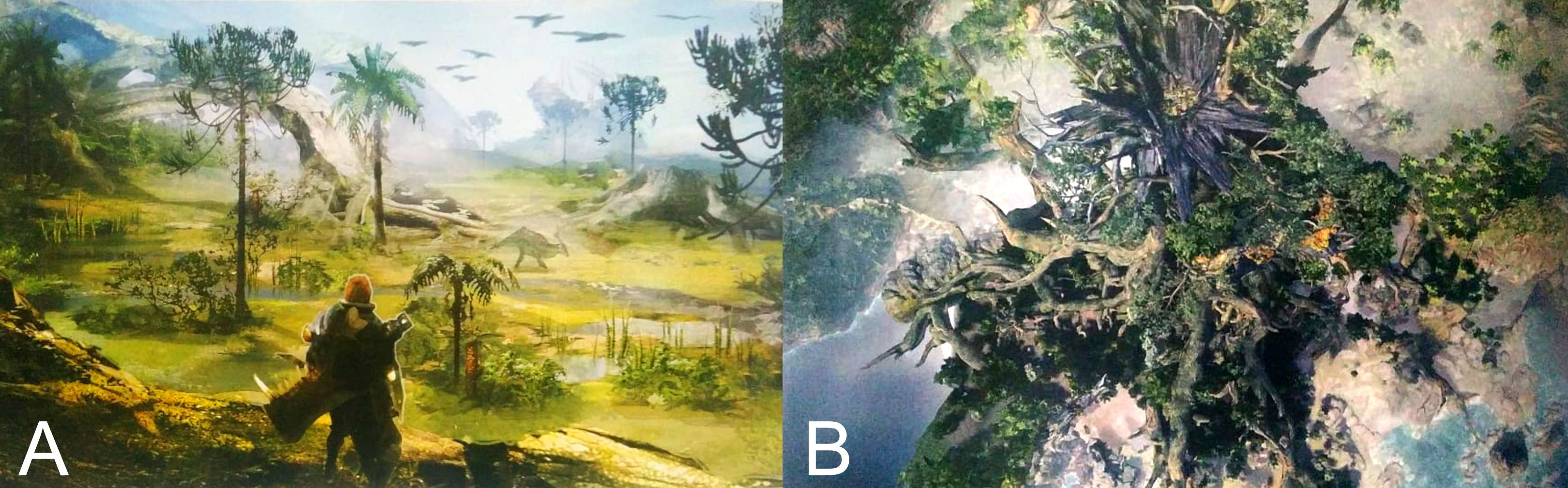
The environment described by the game can be compared to the real-world tree known as “Pando”, located in Utah, USA; it is one of the oldest and biggest living organisms on the planet. It is a colony of Quaking aspen (Populus tremuloides) intertwined by a single root system, covering nearly 43 hectares. Each trunk that emerges from the ground appears to be an individual tree, but all of them are genetically identical and connected to the same roots. This is a unique environment, offering a rich ecosystem that shelters a variety of plants, insects, birds, reptiles and mammals (BBC News, 2024).
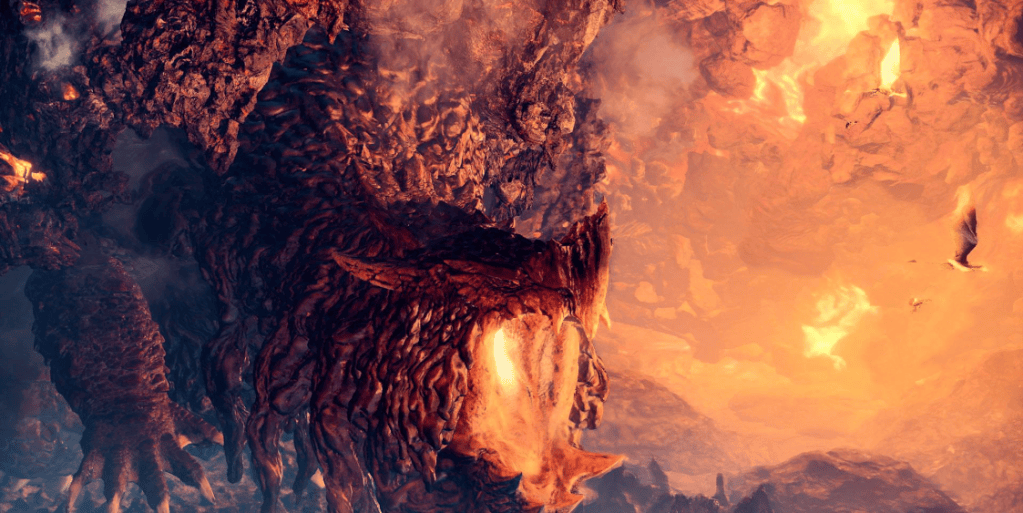
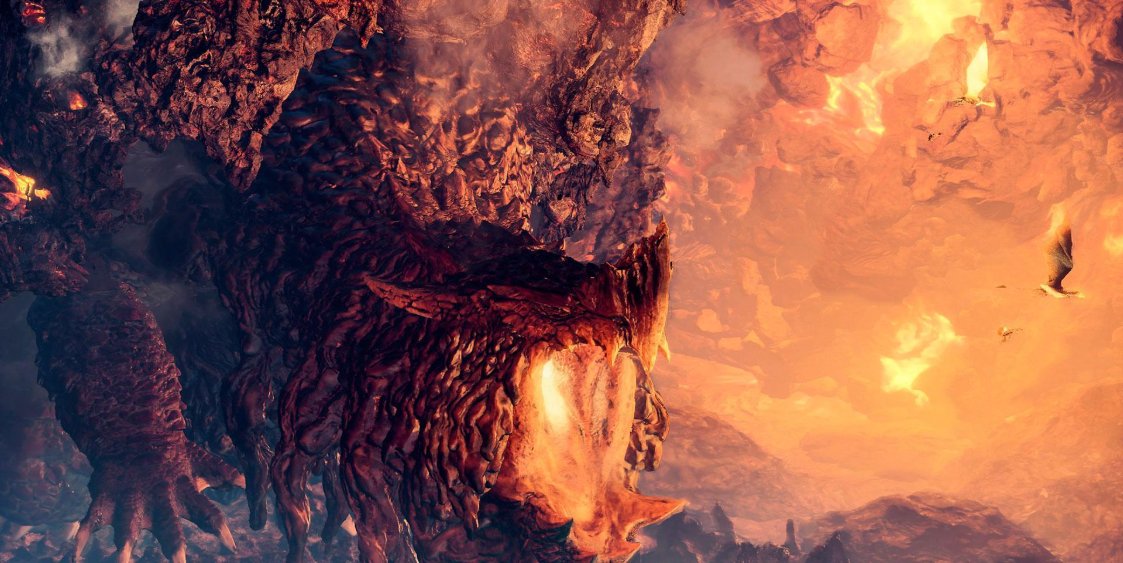
In the game, New World’s entire ecosystem is threatened by the migration of an ancient dragon called Zorah Magdaros (Fig. 2), a gargantuan monster which leaves behind a long trail of destruction wherever it walks, and this continent is on its migration route. The player’s main mission is to divert its route and minimize the damage. Zorah Magdaros’ presence is altering other monsters’ behavior, leaving a trail of destruction, causing the invasion of exotic species in other environments and attracting great predators such as Nergigante, which also parasitizes larger Elder Dragons (a category of stronger monsters) like Zorah Magdaros to feed on their energy, while also competing with other Elder Dragons and hunting other smaller monsters on its path (Capcom, 2018; Viz Media, 2020).
Jagras and Great Jagras
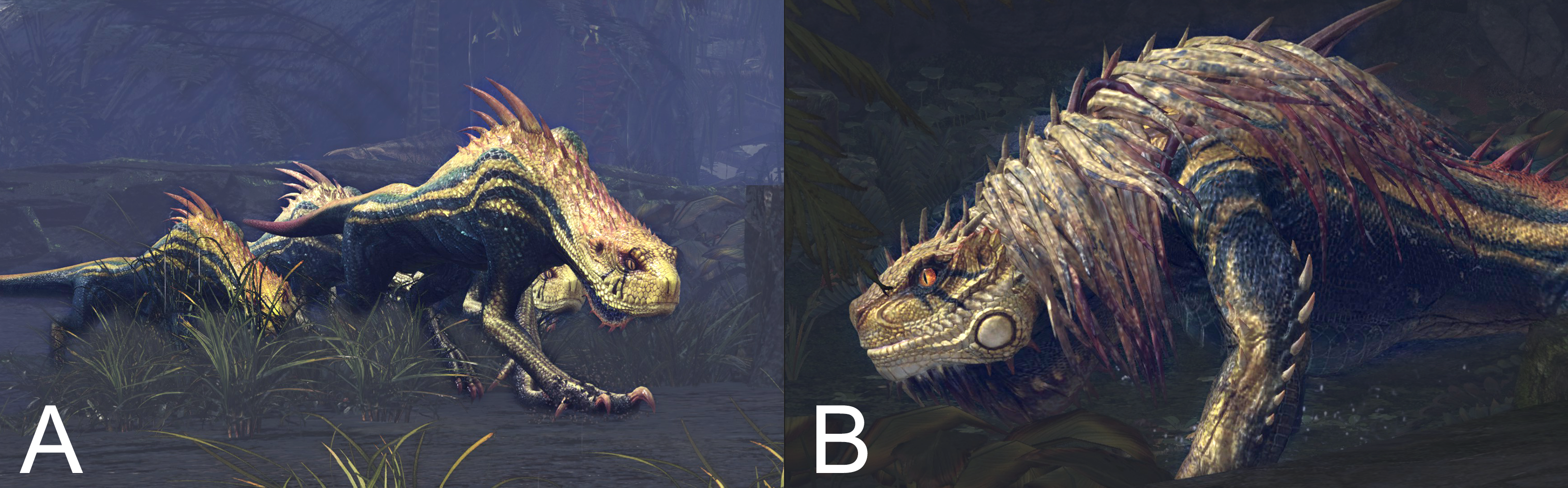
Jagras (Fig. 3A) are medium-sized reptiles, four-legged carnivores that live in packs. Great Jagras (Fig. 3B) is the dominant male of a Jagras pack. A pack consists of a dominant male, several females and some younger males (Viz Media, 2020).
Jagras hunt in packs; their main prey is Shepherd Hare (fictional Lagomorpha) and other smaller creatures. Great Jagras mostly hunts alone; its main prey are Aptonoth and Kestodon. It attacks with bites or uses its front legs to smash its prey, then it swallows the entire creature and goes back to its nest to digest it. As it arrives in its den, it regurgitates part of its partially digested food for the other Jagras. In extreme hunger situations, Great Jagras may challenge bigger and stronger monsters or even practice cannibalism according to Viz Media (2020).
When the pack is threatened, a Great Jagras is the front line of defense. Aside from its teeth and claws, if its belly is full, it uses its swollen stomach to crush the threat and may also regurgitate and spit part of the food containing stomach acid at the opponent. When the leader’s life appears to be in danger, the Jagras join the fight to help. When a group of Jagras is unaccompanied by their leader, they attack in a group, surrounding the opponent; but if any member of the group is killed, all the others will retreat.
When a young male begins to mature, it is expelled from the pride and must live a solitary life. If these Jagras survive long enough to reach maturity, in addition to increasing in size, the spines on their back will grow to form some kind of “mane”, and a large round scale also becomes visible on their jaw, serving as a sexual attractant; thus, they become Great Jagras. But during the reproduction period, these solitary males must return to their place of origin and challenge the dominant male; the winner becomes the leader of the group and copulates with all the females. Females then hide their eggs in mulch (Viz Media, 2020).
The reproductive behavior of these monsters shares similarities with the reproductive behavior of lions (Krebs & Davies, 1996). Its feeding behavior can also be compared to that of snakes. Scartozzoni & Molina (2004) described the feeding behavior of three species of Boidae snakes, but a Great Jagras swallows its prey in a very short time in comparison to reality.
Pukei-Pukei
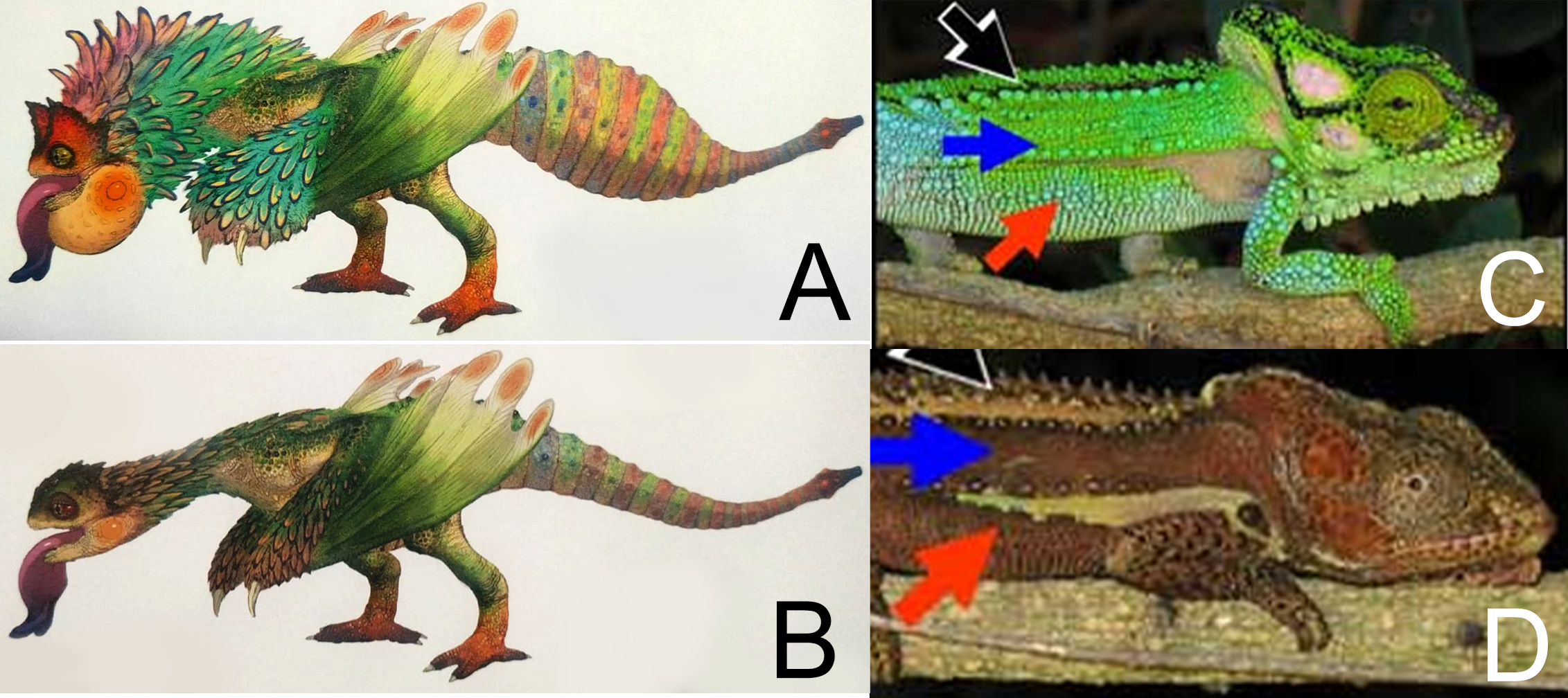
The Pukei-Pukei (Fig. 4A,B) is a large flying, bipedal reptile partially covered with feathers, bearing features that resemble a chameleon. It is a solitary herbivore and defends its territory in dense vegetation.
It feeds mainly on Scatternuts (a fictitious fruit from the game) and other plants, playing an important ecological role in Ancient Forest. According to Viz Media (2020), many plants in the region have a hard shell and can only germinate when a Pukei-Pukei breaks their shell. It also disperses several seeds and spores throughout various regions of the forest in almost all of its activities.
It has very good vision that allows it to identify other monsters from a distance. It also has good enough cognition to read other monsters and measure their strengths to know how to react. If it understands that its opponent is weaker, it raises its feathers and crest, swells its crop and tail to appear larger, and the color of its face and neck feathers changes to a more striking reddish tone. However, if it recognizes the opponent to be stronger, it lowers its feathers and crest, shrinks its neck, and the color of its face and neck feathers changes to a dark green tone, trying to appear less threatening as it retreats.
To defend itself from threats, it relies on a toxin in its saliva, claws on its hind feet, and it also uses its tongue like a whip. A peculiar strategy of this monster is to use certain plants as weapons to spread its toxin; the fruits of Scatternuts naturally “explode” when thrown, launching their seeds in various directions. This monster, in order to defend itself, fills its crop with these fruits, coating them in toxin and then spits them at its opponent. It also eats some plants that already have their own toxins, such as the Poinsoncup (a fictional plant), and stores some in its tail, mixing the plant’s toxin with its own. Over time, this mixture ferments in the tail, forming a poisonous vapor that the monster releases in the form of gas as a last resort. It also spits out plants coated with its toxin to mark its territory.
During the mating season, they seek out Mernos nests. While the nest is unprotected, they lay one of their eggs among the others. The Pukei-Pukei egg hatches first, and the chick pushes the other eggs out of the nest. It is then fed by a Mernos that believes it is feeding its own offspring. The Pukei-Pukei learns to fly on its own while still young and leaves in search of a suitable place to live and feed. (Viz Media, 2020). Its reproductive behavior and parasitic relationship with Mernos are directly analogous to the relationship between the cuckoo bird Cuculus canorus (Linnaeus, 1758) and the reed warbler Acrocephalus scirpaceus (Hermann, 1804), as described by Krebs & Davies (1996). In Monster Hunter World: The Complete Works, the cuckoo is even mentioned as being the inspiration for this behavior.
Fujioka also commented in Monster Hunter World: The Complete Works (Viz Media, 2020) how he wanted players to be able to tell Pukei-Pukei’s mood just by looking at it, the plumage was added to increase this effect. These mood-based color changes are a common behavior found in chameleons, as shown in the study by Stuart-Fox & Moussalli (2008): the colors of Bradypodion sp. become brighter and more conspicuous in a dominant situation (Fig. 4C) and becomes darker and less noticeable when in a submissive state (Fig. 4D).
Tobi-Kadachi
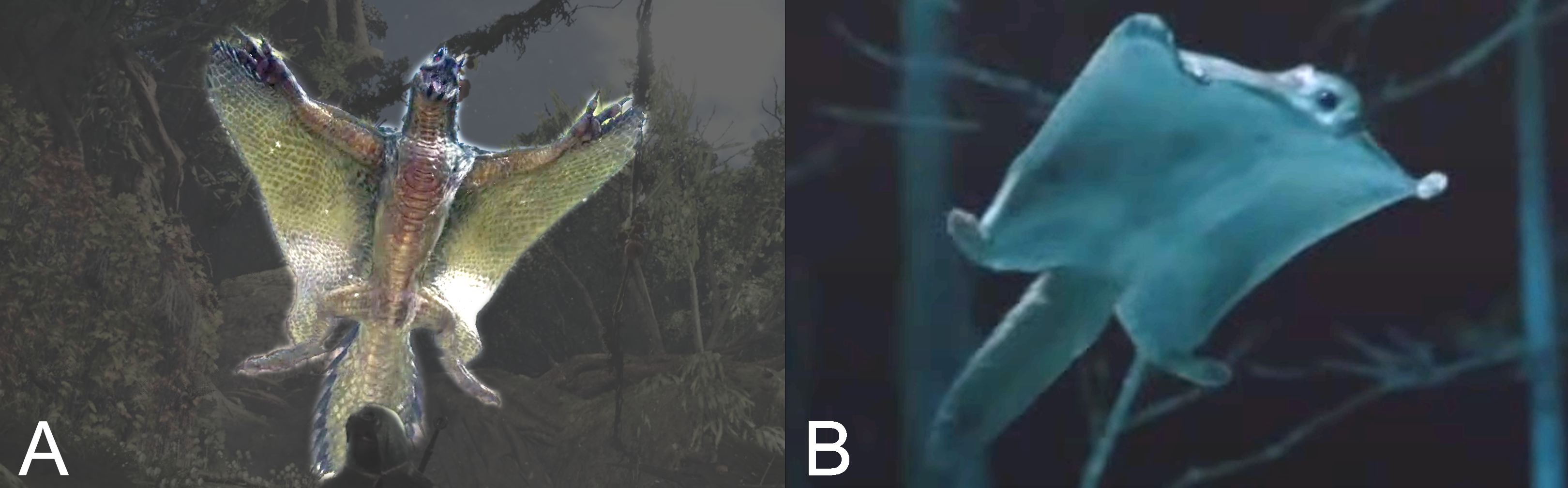
The Tobi-Kadachi (Fig. 5A) is a large, solitary, four-legged carnivore covered in scales and fur. It has small horn-like structures on its head and several pairs of retractable thorns that run from its neck to its large and flat tail. It possesses curved claws adapted for gripping trees and a membrane between its hind and forelegs used to glide between trees. They live solitary lives, and there is no information about their reproduction, but a male’s tail plays a role in attracting mates. It rubs itself against trees and sharpens its claws on bark to mark its territory.
It is a carnivorous monster. There is no information about its main prey, but it can be found near Kestodon, Mernos, and Woodland Pteryx, smaller creatures that are possibly preyed upon. It has modified scales on its jaw that help to trap prey in its bite. It prefers to attack its prey from behind.
It is very agile and fast; it runs, climbs, jumps, and glides between trees, leaping at its opponents and attacking with bites, horn strikes, and its tail, while preserving its claws for climbing. In addition to its agility, as it moves, it rubs itself, generating static electricity in its fur. When charged, it raises its thorns and bristles on its fur; the thorns act as electrodes, storing and conducting electricity. It attacks with its thorns, generating powerful shocks that can paralyze or knock out its opponent (Viz Media, 2020).
A comment by Fujioka in Monster Hunter World: The Complete Works (Viz Media, 2020) states that when creating this monster, they were thinking about how a snake climbs trees and then decided to give the monster four legs and also make it glide between the trees. Observing the anatomy and movement of this monster, it is noticeable that its Bauplan (general body structure) is directly analogous to that of a flying squirrel, Glaucomys sp.; therefore, some of its movements are also similar, as can be observed in Nature on PBS (2018). It also presents anatomical features, mainly the head, and movements that are similar to real snakes (Content Mint, 2019).
Kulu-Ya-Ku
The Kulu-Ya-Ku (Fig. 6A) is a monster native to Wildspire Waste (desert biome), but it can travel long distances in search of food and occasionally ends up invading the Ancient Forest environment. They have been sighted more frequently in Ancient Forest after the migration of Zorah Magdaros, a colossal monster from distant lands that is destabilizing the ecosystem with its presence in New World (Capcom, 2018).
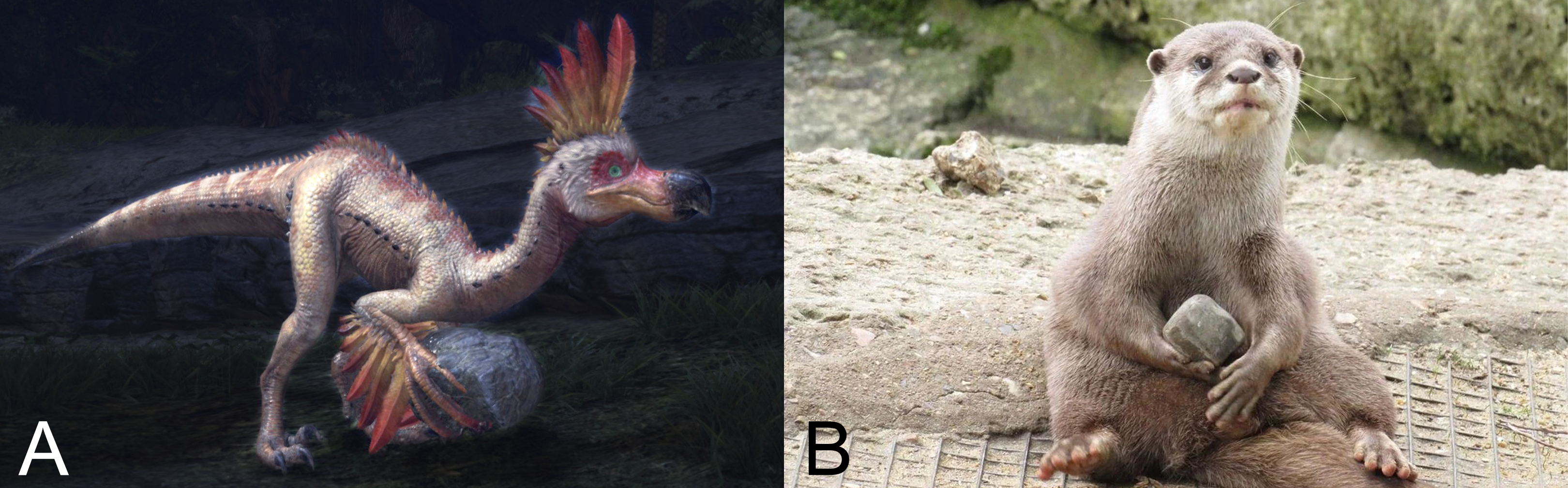
Kulu-Ya-Ku resembles a large, bipedal oviraptorid with a strong beak and some colorful feathers on its head and arms. It lives a solitary life and does not attack other creatures unless threatened. It often preens its feathers while travelling, which causes some to fall out, serving as territorial marking and a way for the monster to know where it has already been.
It feeds on the eggs of other monsters and uses the sensors on its beak to track its food and other objects in the ground. When a nest is unprotected, it takes an egg and runs back to its own nest or safe spot, where it breaks the egg with its beak and eats it. They avoid stealing from the same nest repeatedly; their migratory habits and territorial marking help them prevent this. Due to the very sensitive sensory organs in their beak, a very young individual may feel discomfort when trying to break an eggshell with its beak; therefore, they often use stones as a tool to break the egg.
When threatened, the creature relies on its front and back claws to defend itself, but preferably tries to grab a large rock to use as a shield and as a weapon, or even to throw it at its opponent.
During the breeding season, colorful feathers are important for males to attract females. Kulu-Ya-Ku eggs have a very distinct coloration, and females always lay a pair of eggs; the male takes one, the female takes the other, and each cares for their egg separately, often fasting until the egg hatches. These strategies prevent their eggs from being targeted by other predators and also prevent the Kulu-Ya-Ku from preying upon their own eggs (Viz Media, 2020).
The use of stones to break hard-shelled foods can be observed in otters of the species Enhydra lutris (Linnaeus, 1758) (Hall & Schaller, 1964) (Fig. 6B). Kulu-Ya-Ku takes a step further and also uses them for defense. The behavior of fasting while protecting its own egg is described in Monster Hunter World: The Complete Works as being prone to failure, since in extreme situations an individual may succumb to hunger and devour its own egg. It is also something that can happen in various real-world animal groups; in Bose’s (2022) study, a survey is made about groups that practice cannibalism of their offspring and discusses their contexts and adaptive issues.
In Monster Hunter World: The Complete Works (Viz Media, 2020), Fujioka commented that while creating this monster he decided that the act of pecking would fit well since it was supposed to feed on eggs, therefore they chose to make it look like a bird.
Anjanath
The monster Anjanath (Fig. 7A) is a large, bipedal, carnivorous reptile, extremely anti-social, very similar to a tyrannosaurid, but it has retractable “sails” on its back, retractable spines on its tail, and feathers covering its back and tail. It marks its territory by spitting mucus onto trees.
It is a hunter, its main prey being Aptonoth, and it can prey on up to five of them per day. It has a very specific routine of feeding: first it hunts, eats, drinks water, and rests. It is a skilled hunter, possessing various natural weapons but uses them cautiously, preferring to take down its prey with brute force, teeth, and claws to conserve physiological resources that may be important for defending its territory.
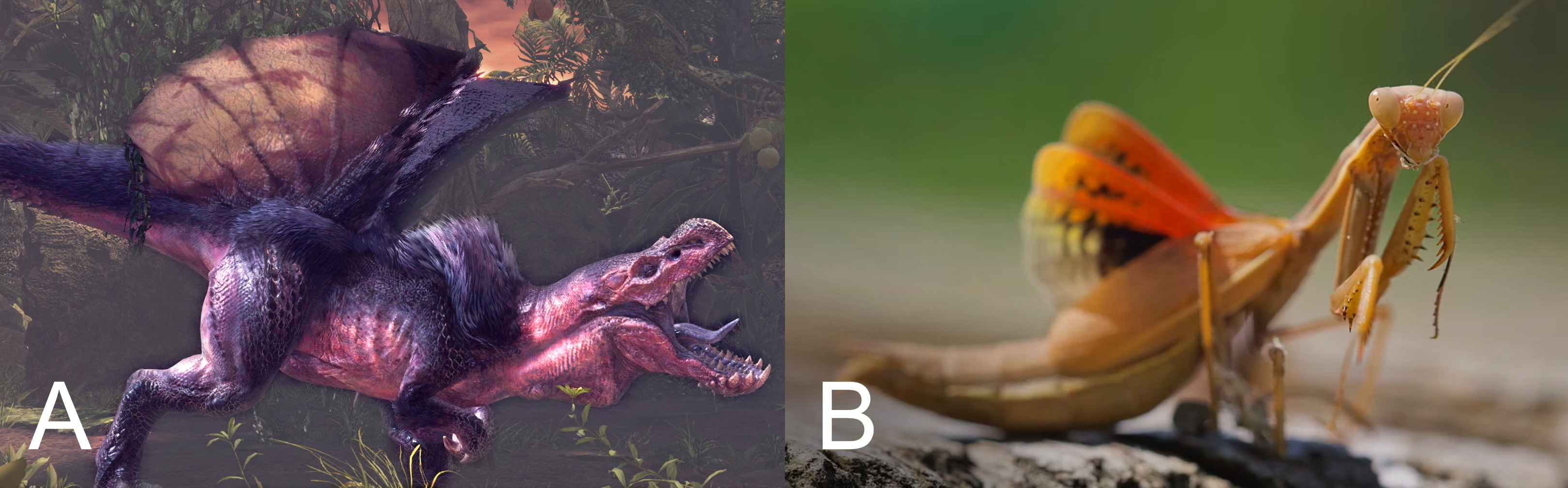
It is aggressive and solitary, commonly seen attacking Great Jagras and Tobi-Kadachi when they present any kind of competition. In addition to its powerful bite, it possesses large hind claws, retractable spines on its tail, and a special organ in its throat that produces a substance that, when mixed with the mucus in its nostrils, causes the mixture to ignite, allowing Anjanath to “spit fire”. This function is used as a last resort, as it can greatly raise its body temperature (Capcom, 2018; Viz Media, 2020).
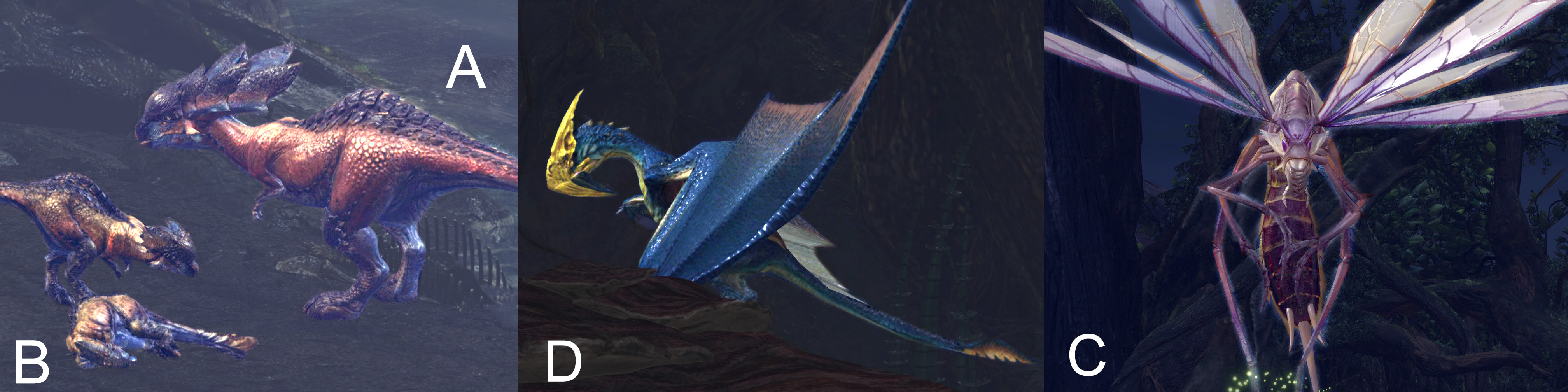
The monster possesses a pair of sail-like structures on its back that serve for communication, intimidation, and to regulate body temperature. These are colorful and highly vascularized membranes; when raised, Anjanath appears larger, more conspicuous, and can release excess accumulated heat. It also has a highly developed sense of smell and a peculiar ability to expose its nasal cavities outwards, greatly increasing its scent detection and allowing it to identify the direction and distance of its prey, making it very difficult for prey to hide from it. This prolapse of its nostrils also helps to expel mucus with more velocity and efficiency (Viz Media, 2020).
The display of colorful sails is very similar to the behavior of some praying mantis species that display their colorful wings in response to predators (Fig. 7B). For example, Maldonado (1970) described this behavior in the species Stagmatoptera biocellata (Saussure, 1869).
Fujioka in Monster Hunter World: The Complete Works (Viz Media, 2020) talked about how he wanted this monster to hunt the player by their scent, which is probably why they chose to make its nostrils flashier to show that. He also talks about how this monster’s design was based on feathered dinosaurs and decided to make Anjanath’s feathers resemble those of a vulture.
Rathian and Rathalos
Rathian (Fig. 8A) and Rathalos (Fig. 8B) are large, bipedal, flying reptiles with the classic “dragon” appearance and are the apex predators in Ancient Forest. They are the same species: Rathalos refers to the male and Rathian to the female. They can live in pairs or solitarily. They mark their territory by sharpening their claws on trees.
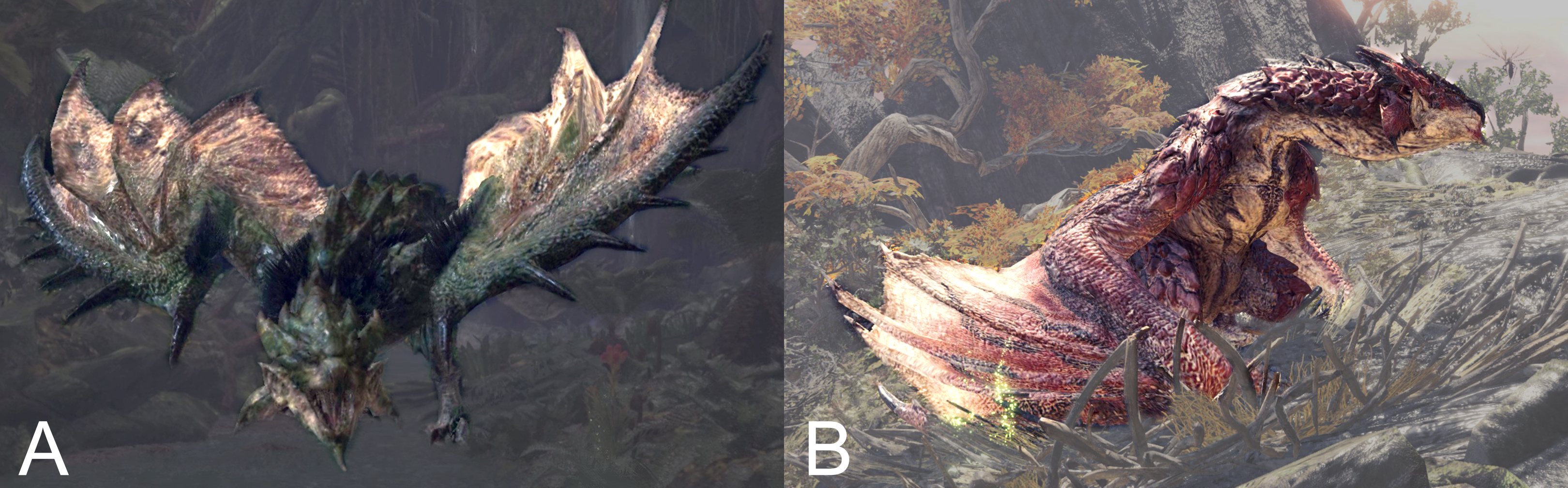
They do not mind small creatures, but Rathalos likes to demonstrate dominance over any other large predators that might present competition, such as Anjanath. Both Rathian and Rathalos possess very strong hind legs with large claws as their main weapons, but they can also spit fire through a specialized organ, have venom at the tip of their tails, and their hind claws can also excrete venom. When the female Rathian is in danger and alone, Rathalos will come to her aid.
A Rathalos can mate with multiple females, but only one dominant female will share the nest with the Rathalos and benefit from its parental care. The other females live alone, often being expelled from Ancient Forest by the matriarch and building solitary nests in Wildspire Waste. A female lays up to ten eggs at a time, and the Rathalos guards the nest while the Rathian hunts; they take turns watching over it, and their main prey is the Aptonoth. They are very protective and become aggressive when any creature approaches their eggs, but they don’t usually worry about smaller carnivores near the nest, as these scare away other creatures that might try to steal their eggs (Viz Media, 2020).
During the breeding season, the thorn on Rathalos’s chin grows to help it dig and build the nest. When the hatchlings are born, Rathian will need to hunt for itself and the hatchlings. Rathalos protects the nest while Rathian is away and also protects the Rathian while it is incubating the eggs. During this period, Rathalos becomes more dangerous, attacking any potential threat. (Viz Media, 2020).
Aptonoth
Similar to hadrosaurids and medium-sized, the Aptonoth (Fig. 9A) are the most numerous herbivorous creatures in the Ancient Forest. They serve as prey for most carnivores. They live in herds, and when in danger they flee together, with males attempting to attract attention, putting themselves in danger to save the females and offspring. They can sometimes be found with some Downy Crakes (Fig. 9A) perched on their backs, forming a symbiotic relationship, in which the Aptonoth serves as support or a resting point, and the Downy Crakes alert them to any possible threat (Viz Media, 2020).
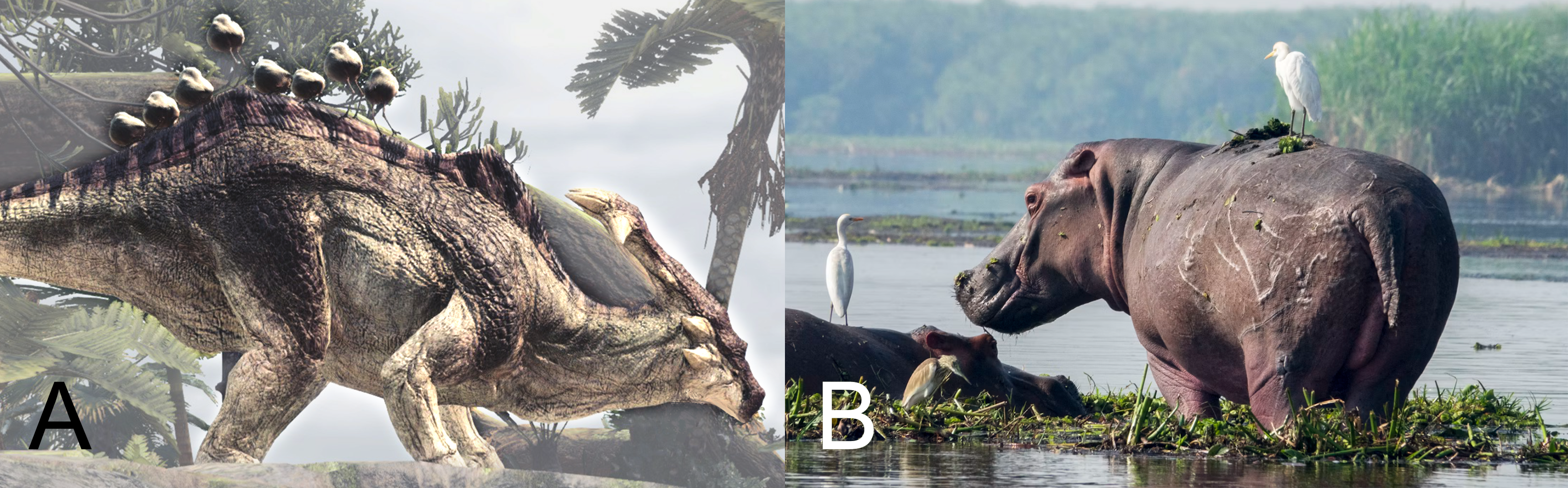
Aptonoth plays the role of a primary consumer and is at the base of the food chain. The relationship between Downy Crakes and Aptonoth is similar to description of birds with hippos and birds with crocodiles in the Ndumu Game Reserve in Zululand, South Africa (Pooley’s, 2010).
Kestodon
Medium-sized social herbivores similar to dinosaurs of the suborder Pachycephalosauria, and preyed upon by some carnivores. Males are orange and have larger shields on their heads, while females are smaller, yellowish, and have a smaller shield on their head (Fig. 10A). They use their powerful skulls for defense and to strike trees, causing fruits and nuts to fall for food.
They live in small flocks with one or two males and some females. Males and females have distinct roles in defending the group; females are very vigilant and are the first to identify a threat, alerting the males through vocalization, and the males then serve as the front line in the defense (Viz Media, 2020).
Mernos
Mernos (Fig. 10B) are medium-sized flying reptiles, similar to pterosaurs. They feed on small fruits and nuts. They live in pairs or small groups of three individuals, but occasionally join larger groups in flocks to travel long distances. Easily startled, they tend to flee if they feel threatened (Viz Media, 2020).
Vespoid
The Vespoid (Fig. 10C) are large flying insects with anatomical characteristics similar to wasps. They have strong mandibles and a stinger with paralyzing venom. When a large monster approaches, they attack in groups to scare it away. It is also mentioned that they form swarms to establish nests (Viz Media, 2020).
Mosswine
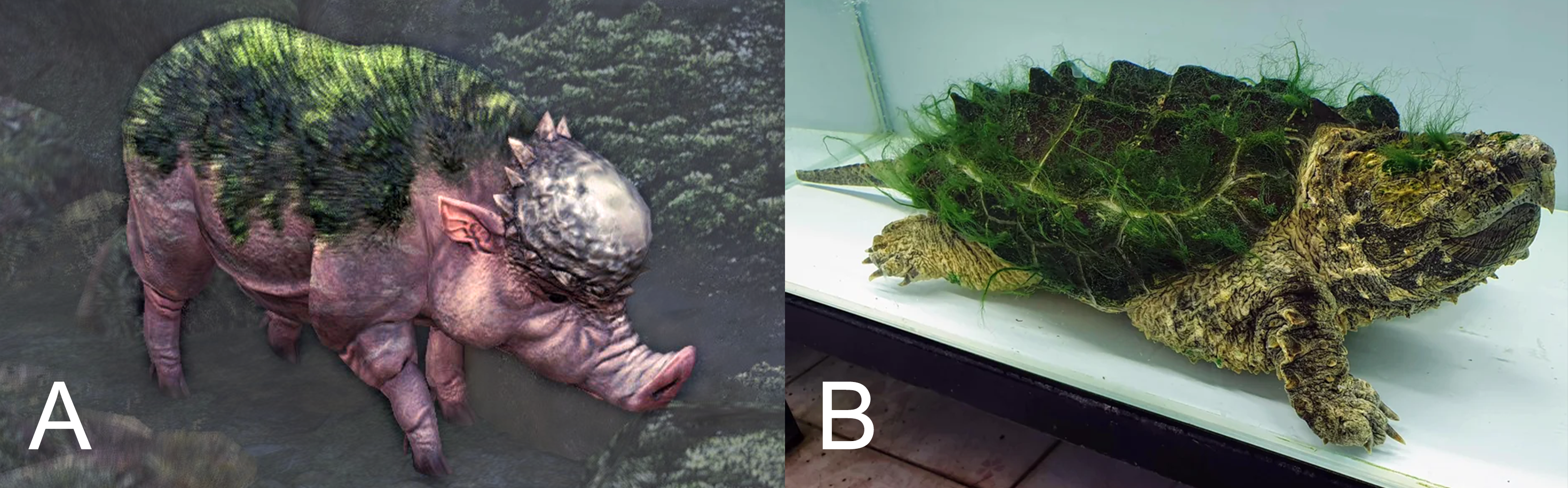
A type of swine with long snouts, a bony carapace on its head and moss on its back (Fig. 11A). They are docile creatures with solitary habits and a very keen sense of smell. They can be seen sniffing and searching for rare mushrooms which only they can find; after eating the mushrooms, the moss on their back glows. Bristly Crake (a subspecies of Downy Crake) often rests on Mosswine’s backs and according to Viz Media (2020), they also feed on the creature’s parasites while doing so.
Apparently, there is no official explanation for the moss on the creature’s back, but something similar happens in the real world, with many Testudines in nature, which can be found with algae growing on their shells (Fig. 11B) (Edgren et al., 1953). In the case of Mosswine, however, it seems to be some kind of symbiosis or co-evolution. The detail of a rare mushroom that can only be detected by the swine may have been inspired by real pigs that are used to sniff out truffles (Klocek et al., 2019).
Small creatures
Small creatures, generally with less information available, usually fill small roles to be observed by the player, to communicate situations, or serve as tools. They simply complement the ecosystem.
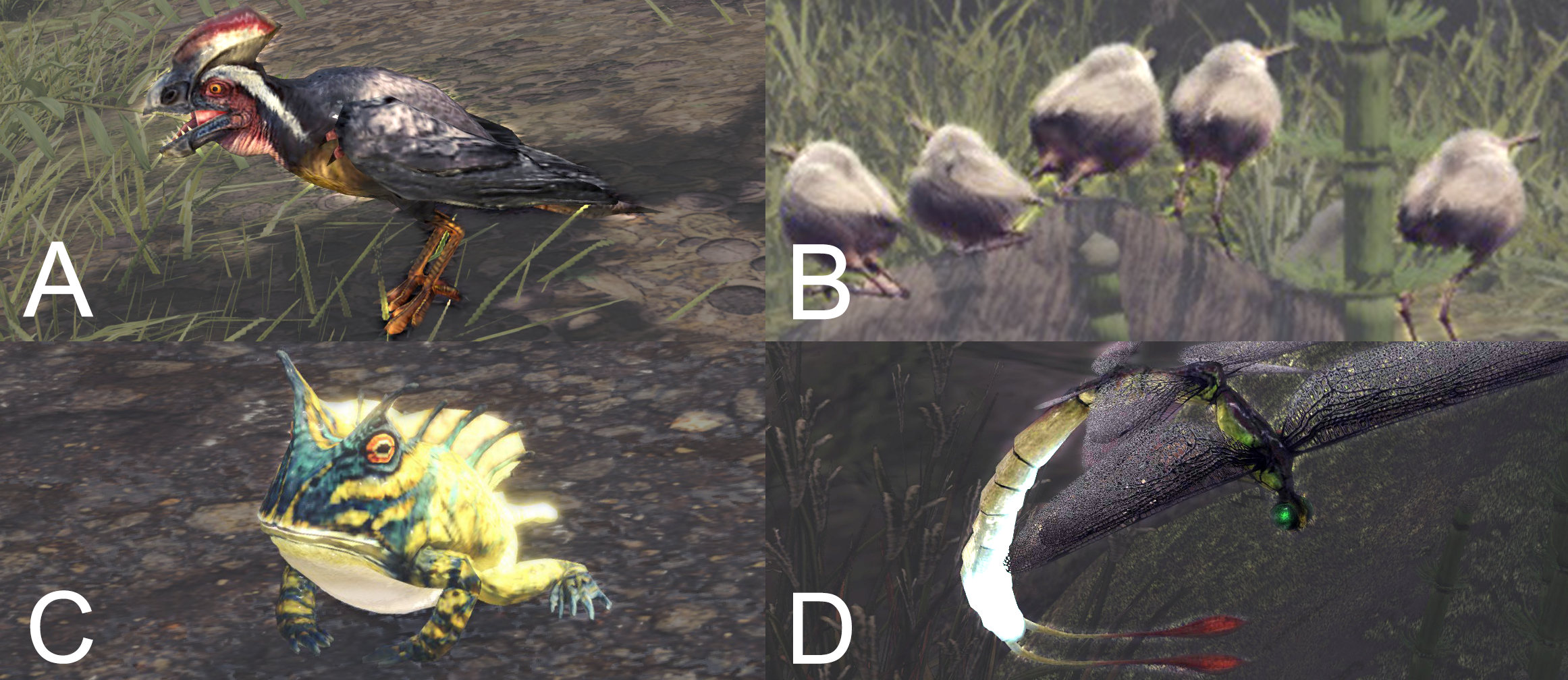
Revolture (Fig. 12A) are small, vulture-like birds. They are scavengers and fly high while following large carnivores waiting for a kill and may even land to eat while the large carnivore is still nearby. They are directly analogous to vultures. Ferguson-Lees & Christie (2010) discussed the feeding habits of Gyps bengalensis (Gmelin, 1788), which observe predator activity to feed on carcass remains.
The Downy Crake (Fig. 12B) is a round bird that perches on the backs of some herbivorous monsters, flying away quickly when they encounter danger. Paratoads (Fig. 12C), on the other hand, are amphibians that release a paralyzing gas when threatened; it can even paralyze large monsters.
Finally, there are the Omenfly (Fig. 12D), which are flying insects similar to dragonflies. They are bioluminescent and glow in different colors depending on the situation. The tip of their abdomen glows yellow when they feel threatened; when they identify danger, they glow red and fly in an ‘8 pattern’ with rapid movements. The Omenfly mechanism appears to be a form of communication, as fireflies communicate through light patterns, but with mating objectives (McDermott, 1917).
Further mentions
Table 1 shows 15 creatures from the game considered of lesser relevance because they do not exhibit significant ecological interactions with any other individuals, do not perform elaborate behavior, or their behavior cannot be observed. A morphological comparison was made with their analogous taxonomic groups, and their behavioral data described when available.
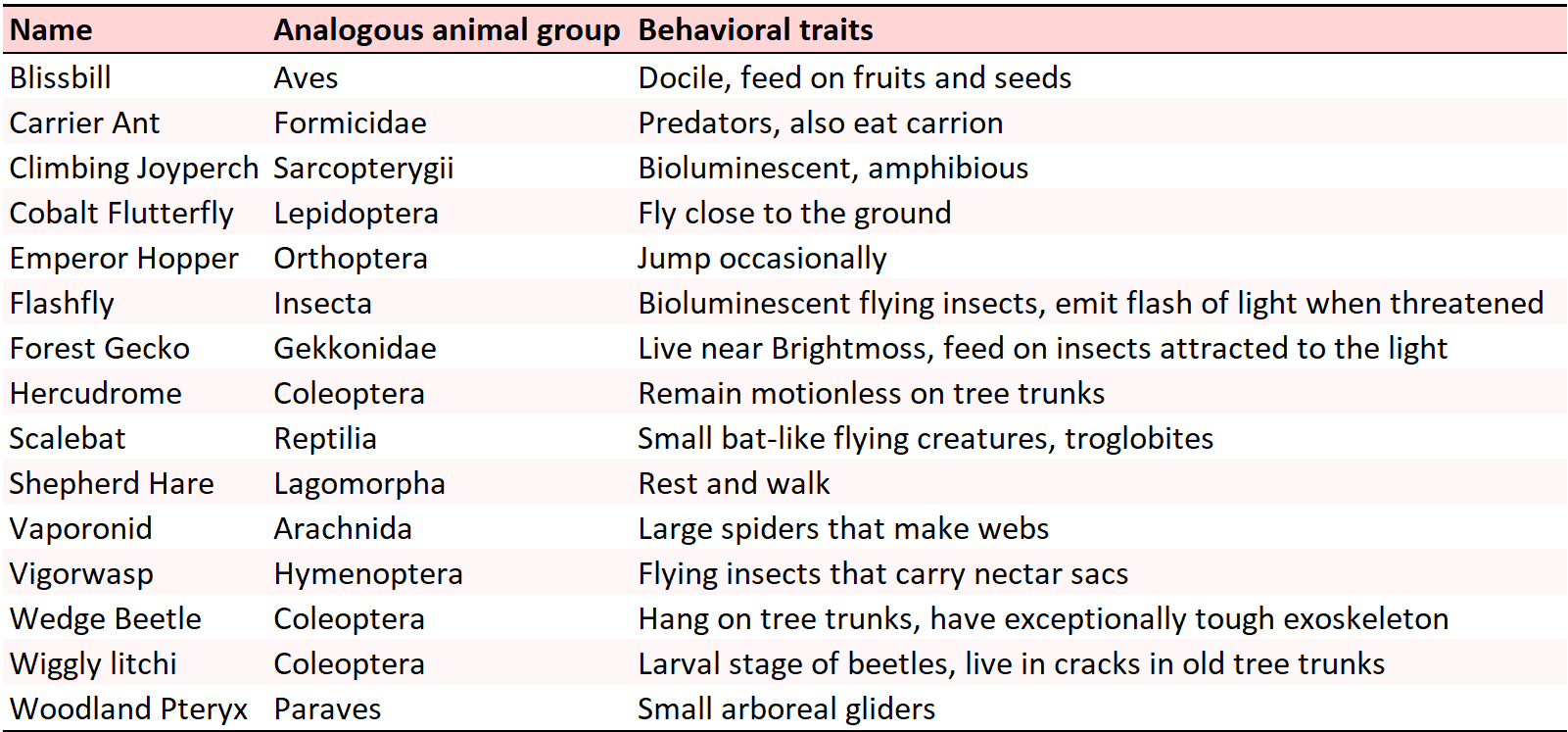
These creatures, despite not exhibiting complex behavior, are briefly described in the game’s text and in the book. Throughout the game, it’s possible to encounter biologists, entomologists, and researchers from different fields who ask the player to capture specimens to aid in their research. These creatures fulfil small aesthetic and ecological roles and ultimately contribute to showing that arthropods and other small animals are also part of the ecosystem and should not be forgotten.
CONCLUSION
Many monsters have characteristics and behaviors analogous to real-world animals and play some role in the game’s ecosystem. All of them have at least some characteristics similar to real animals. Many monsters in the game showed realistic ecological relations such as various kinds of competition, parasitism, mutualism and commensalism. Just like predators in real-world nature, some monsters exhibit territorialism, prey pursuit, and ambush strategies, while others demonstrate defensive attitudes and fleeing behaviors when threatened, similar to prey in dangerous situations. Furthermore, complementary information from the book and in-game texts, features such as mating rituals, communication through sounds and body postures, and eating habits reinforce the realism of the creatures in the game.
The analogues that were cited in this study are just a few examples selected from a very small part of the game. If deeper analysis were carried out, it would be possible to compare almost all behavioral and ecological aspects of all the monsters and plants in the game with those of real animals.
These details deepen the player’s immersion, allowing them to observe, learn and anticipate the monsters’ actions, as a real hunter would with wild animals. The inspiration in reality, the constant mention of scientific topics, such as the areas of biology and ecology, the diversity of researcher characters and their prominence in the plot, encourages learning about this topic. As biologists studying a fantasy environment while comparing it to reality and discovering backstage details and interviews, it became very clear how much the developers cared and did their research in order to create this game. Even though it is still a fantasy scenario, such complexity and coherence has immersed us so deep into the fictional world of Monster Hunter: World, that the process of this study was initially carried out very similar to a real-world field observation, to a point where we had to remind ourselves that we were dealing with fictional animals in a video game and no ethics were required. This care and attention to details generates curiosity and invites the players to ask questions, to learn more about the game’s biological aspects in order to understand where the plot is going, to improve their skills and advance in the game, and that may inspire them to look differently and with more interest at real world animals, environments and their ecology for the same reasons that it makes a biologist feel welcome when playing Monster Hunter: World.
REFERENCES
BBC News. (2024) Pando, a árvore de 40 hectares considerada um dos seres vivos mais antigos e pesados do mundo. BBC News Brasil. Available from: https://www.bbc.com/portuguese/articles/c33e6m7ygnjo (Date of access: 11/Nov/2024).
Bose, A.P.H. (2022) Parent–offspring cannibalism throughout the animal kingdom: a review of adaptive hypotheses. Biological Reviews 97: 1868–1885.
Capcom. (2018) Monster Hunter: World. Capcom, Osaka.
Content Mint. (2019) Snake climbing tree. YouTube. Available from: https://www.youtube.com/watch?v=TIPgJY4wJvU (Date of access: 19/Nov/2024).
Edgreen, R.A.; Edgreen, M.K.; Tifanny, L.H. (1953) Some North American turtles and their epizoophytic algae. Ecology 34: 733–740.
Ferguson-lees, J. & Christie, D.A. (2010) Raptors of the World. Soho Square, London.
Goulart, F.O. (2019) Os fungos em Pokémon. Revista Multidisciplinar de Estudos Nerds/Geek 1: 31–38.
Hall, K.R.L.; Schaller, G.B. (1964) Tool-using behavior of the California sea otter. Journal of Mammalogy 45: 287–298.
Nature on PBS. (2018) How the Flying Squirrel Soars. YouTube. Available from: https://www.youtube.com/watch?v=C7DbGl36AWA (Date of access: 19/Nov/2024).
Jennings, B. (2019) Perceiving the emotions of Pokémons. Journal of Geek Studies 6(2): 127–130.
Kittel, R.N. (2018) The entomological diversity of Pokémon. Journal of Geek Studies 5(2): 19–40.
Klocek, C.; Nowicki, J.; Magiera, A.; Penar, W. (2019) Unconventional uses of pigs. Annals of Warsaw University of Life Sciences, Animal Science 58: 251–260.
Krebs, J.R. & Davies, N.B. (1996) Introdução à Ecologia Comportamental. Atheneu, São Paulo.
Maldonado, H. (1970) The deimatic reaction in the praying mantis Stagmatoptera biocellata. Zeitschrift für vergleichende Physiologie 68: 60–71.
Mcdermott, F.A. (1917) Observations on the light-emission of American Lampyridae. Canadian Entomologist 44: 309–311.
Pooley, A.C. (1967) Bird/crocodile and bird/hippopotamus commensalism in Zululand. Journal of African Ornithology 38: 11–12.
Sarges, W.V.D. & Marinho, L.C. (2022) Pokémon como ferramenta de divulgação científica em diferentes universos. Botânica Pública 3: 20–25.
Sevin, C. (2026) Monster Hunter: an evolutionary story. Journal of Geek Studies 13: 15–27.
Scartozzoni, R.R. & Molina F.B. (2004) Comportamento alimentar de Boa constrictor, Epicrates cenchria e Corallus hortulanus (Serpentes: Boidae) em cativeiro. Revista de Etologia 6: 25–31.
Stuart-Fox, D. & Moussalli, A. (2008) Selection for social signalling drives the evolution of chameleon colour change. PLoS Biology 6: 20–29.
Udon Entertainment Corps. (2011) Monster Hunter Illustrations, v.1. UDON Entertainment Corps, Richmond Hill.
Viz Media. (2020) Monster Hunter World: The Complete Works. Viz Media, San Francisco.
Acknowledgements
Special thanks to Fábio Prezoto for helping and giving professional feedback throughout the writing of this study.
About the authors
Gabriel Ribeiro de Melo is a concept artist and illustrator, graduated in Biology from UniAcademia in Minas Gerais, Brazil. He focuses on integrating biology into art with character and creature design.
Dr. Helba Helena Santos Prezoto earned her PhD in Animal Behavior and Biology and serves as a faculty member in the Biological Sciences program at UniAcademia), Brazil.